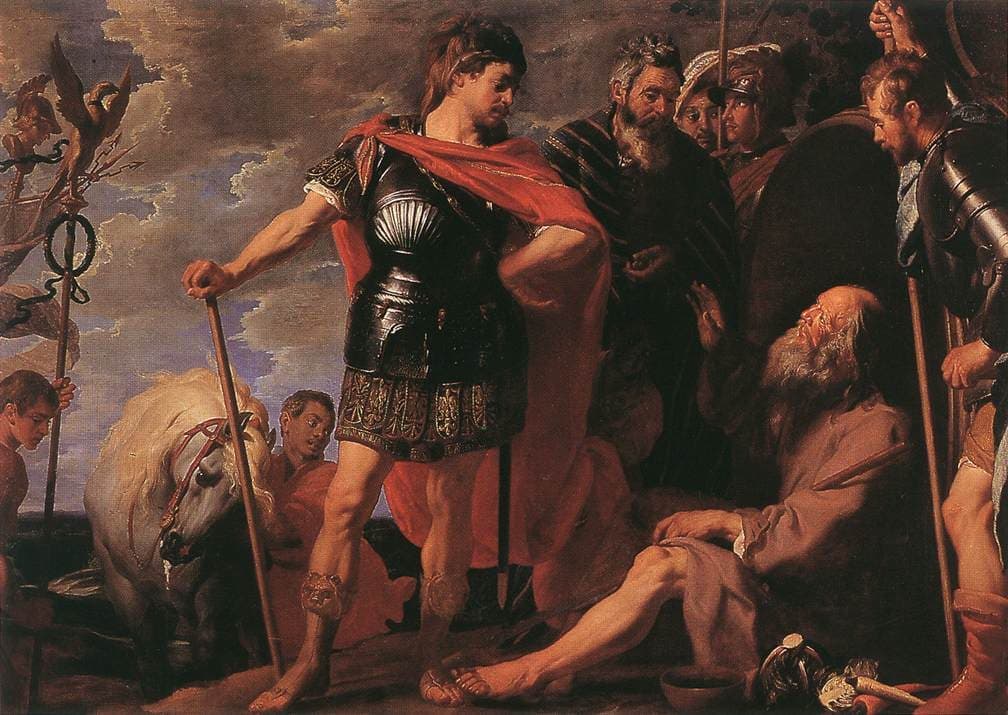
Alexander had just been confirmed as commander of the Greek forces against Persia. The great and the good of Greece came to Corinth to congratulate him. Diogenes the Cynic, who was living in the city, did not. So Alexander went to find him.
Whoever travels has conceded something
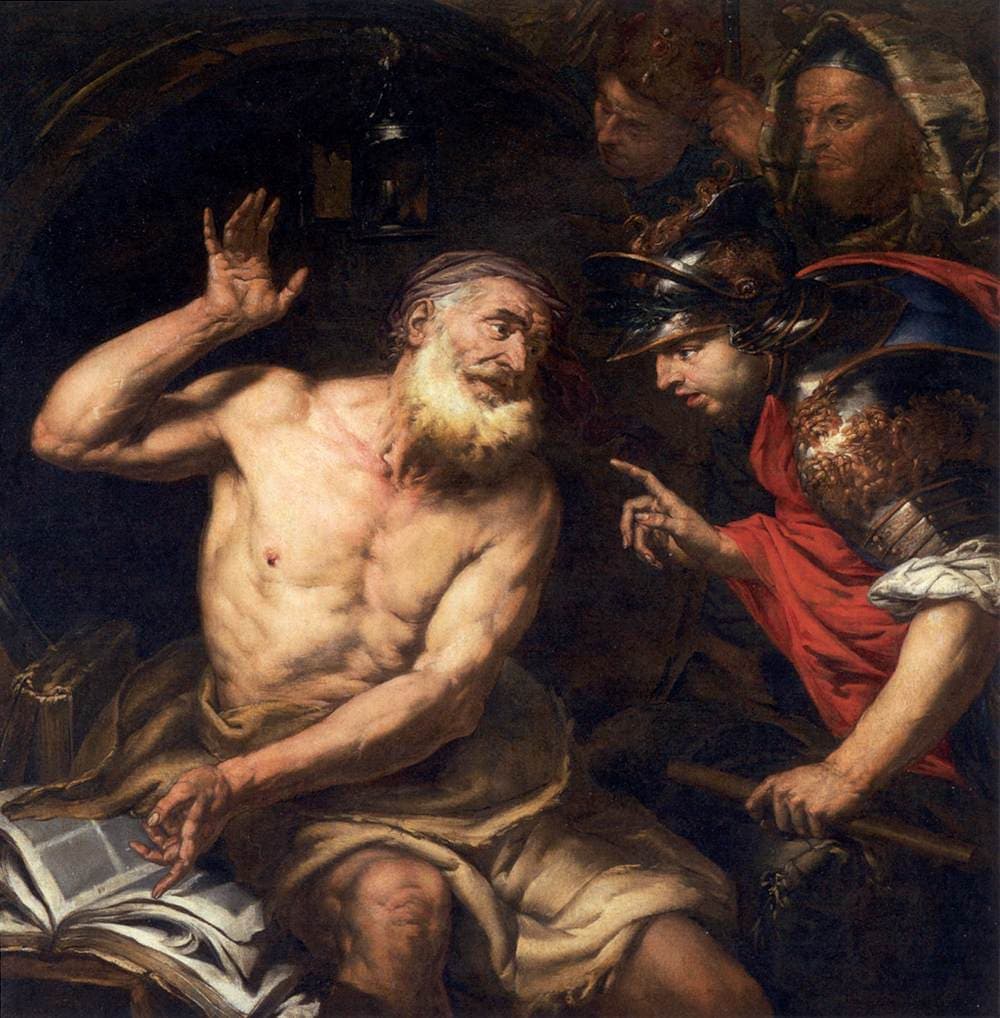
Diogenes was a philosopher whose entire position was that almost everything people want is unnecessary. He owned close to nothing, slept in a large ceramic storage jar, and had made a career of being conspicuously unimpressed. He was, in the terms of the moment, the one invitation Alexander could not get accepted.
So Alexander walked out to the suburb where Diogenes was lying in the sun. This is the part that survives for a reason: in a culture built entirely on precedence, the person who moves is the person who wants something. Alexander moved.
The exchange
Alexander introduced himself and asked whether there was anything he could do for him. Diogenes asked him to move slightly to the left, because he was blocking the sun.
Alexander's companions laughed. Alexander reportedly said that if he were not Alexander, he would want to be Diogenes — which is either a graceful loss or the neatest recovery in the historical record.
Why it lasted
Nothing was decided, nothing was agreed and nobody's plans changed. It survives because it is the cleanest demonstration of a rule everyone recognises: the terms of a meeting are set less by who calls it than by who needs it.
There is a version of this in every calendar. The person who rearranges their week, travels, and waits is telling the other party something before a word is spoken.
What people get wrong
Diogenes did not live in a barrel — wooden barrels of that kind did not exist in fourth-century Greece. The word used is pithos, a large earthenware storage jar. And the whole scene is recorded by writers working centuries later, principally Plutarch and Diogenes Laertius; several ancient authors doubted it happened at all, noting that Alexander and Diogenes are also said to have died on the same day, which is the sort of tidiness that suggests a story rather than a record.
Stand a little out of my sun.