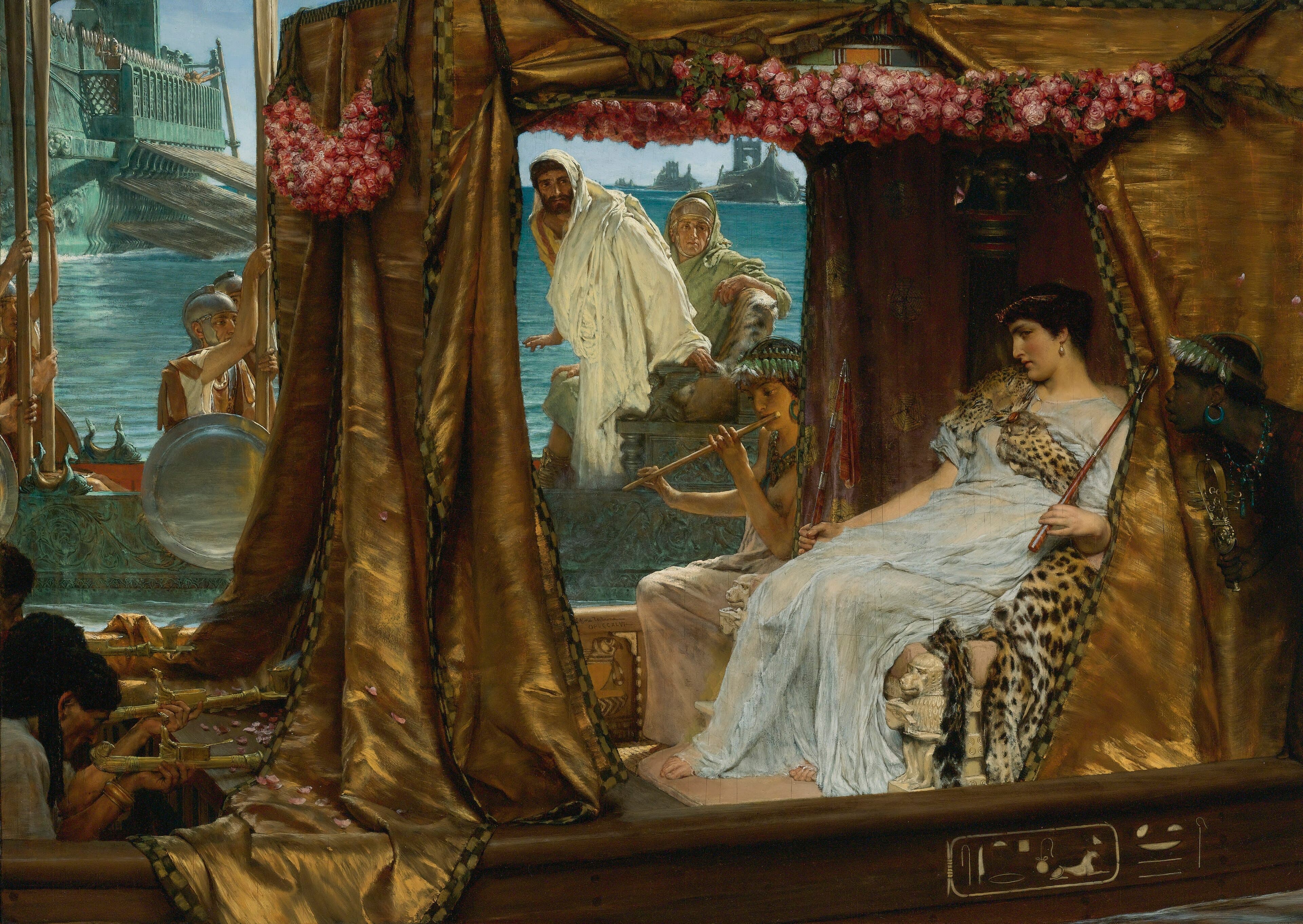
After Caesar's assassination the Roman world had split and fought itself, and Mark Antony had come east to raise money and settle accounts. One of the accounts to settle was Egypt, whose queen was suspected of having helped the wrong side.
A summons is a scheduling instrument
Antony sent for Cleopatra to come to Tarsus and explain herself. The form of the thing mattered as much as the content: a Roman triumvir naming a time and a place, and a client monarch expected to appear at it. Complying meant accepting the relationship the summons implied.
She accepted the date. Then she took her time getting there, and arrived in a way that made the arrival the event.
The barge
Plutarch's description — the gilded stern, the purple sails, the silver oars keeping time to flutes, Cleopatra dressed as Aphrodite beneath a canopy — is one of the most quoted passages in ancient biography, and Shakespeare lifted it almost directly through Thomas North's translation.
What the staging accomplished was tactical. The whole city went down to the river to look, leaving Antony sitting alone in the marketplace where the meeting was supposed to happen. He sent an invitation to dinner. She declined and invited him to hers instead. He went.
In the space of an afternoon the terms had inverted: the man who had issued the summons was now the guest.
What it was actually about
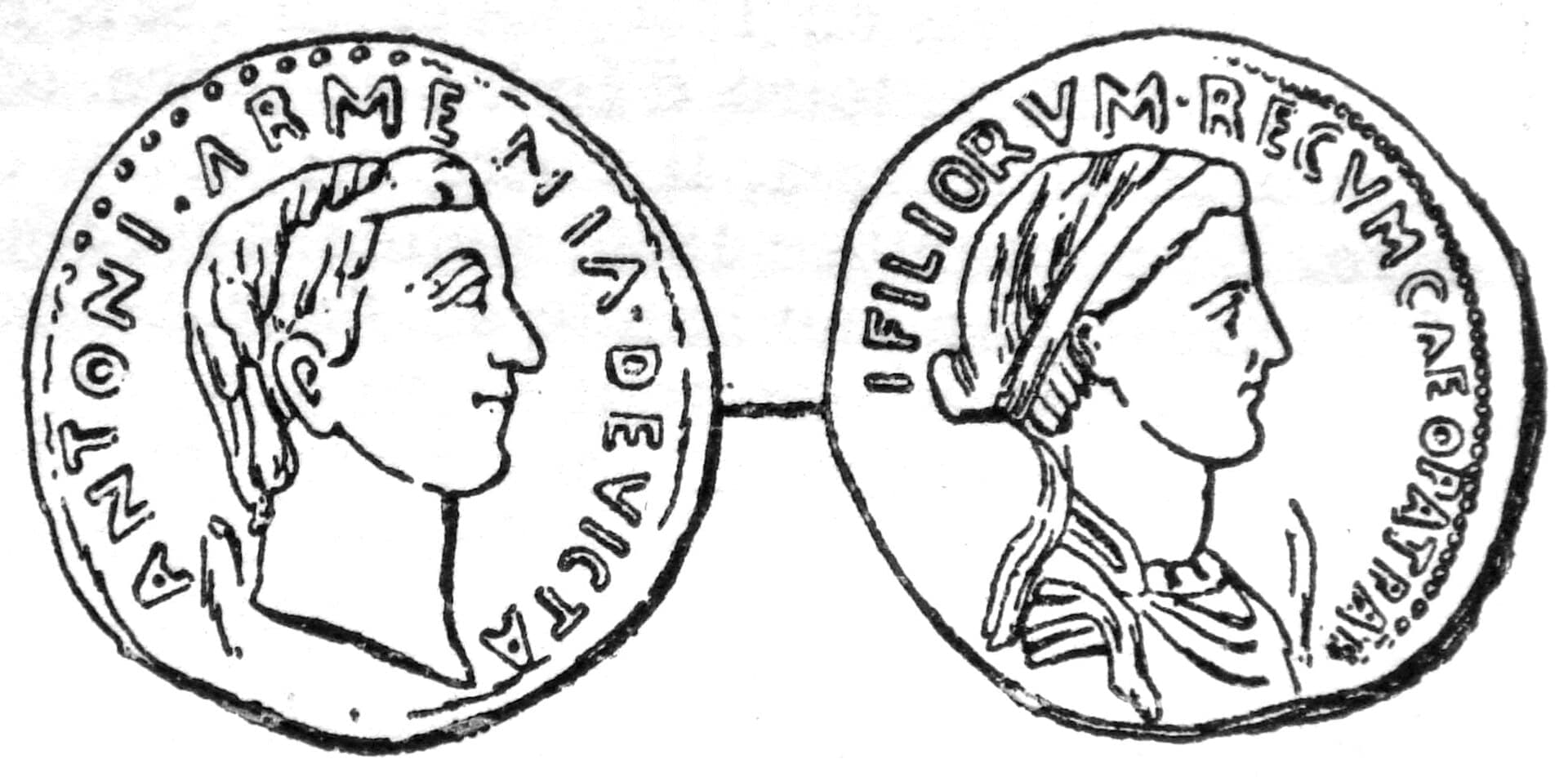
Underneath the spectacle was a straightforward negotiation. Antony needed money and grain for a campaign against Parthia, and Egypt had both. Cleopatra needed Roman backing to hold a throne she had already fought a civil war for, and needed a specific rival — her sister Arsinoe — removed.
Both got what they came for. The relationship that followed lasted until they were defeated at Actium and died in 30 BCE, and it destroyed Antony's standing in Rome long before it killed him. Whether the meeting was a triumph for either of them depends how far forward you run the tape.
What people get wrong
Nearly everything vivid about this meeting comes from Plutarch, writing more than a century later, and he was working from sources with their own reasons to portray Cleopatra as a seductress who unmanned a Roman general. The barge may well have been magnificent; the account we have of it is literature written by the winning side's cultural heirs. Shakespeare then dramatised Plutarch, and most people's mental image comes from the play rather than from anything closer to the event.
He named the time and the place. She agreed to both, and still made him come to her.