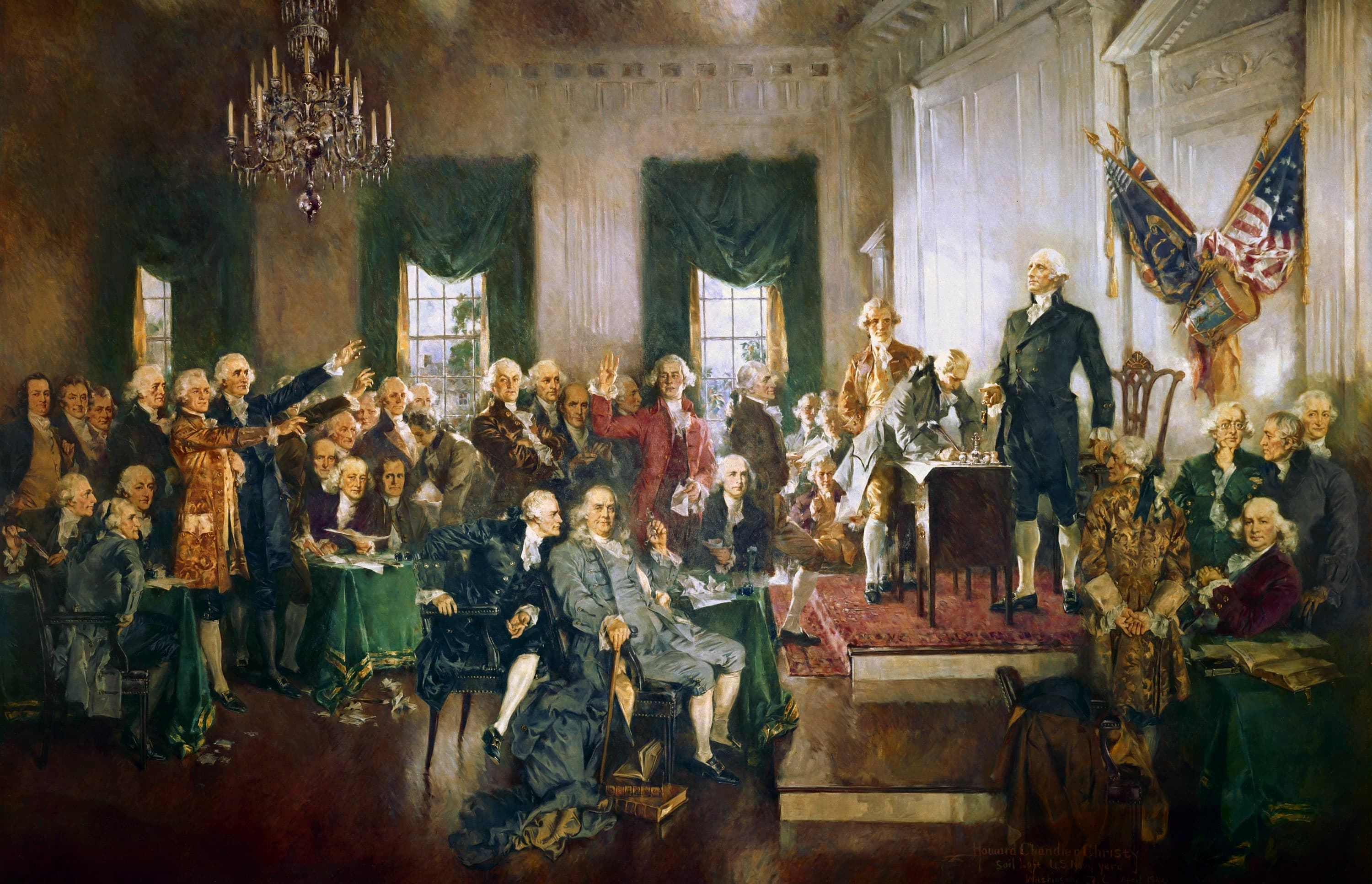
The convention was called for Monday 14 May 1787. On that Monday, the delegates from Virginia and Pennsylvania looked around a mostly empty room and adjourned. They did this every day for eleven days, until enough states had arrived to begin.
Eleven days of adjourning
Getting to Philadelphia in 1787 meant weeks on bad roads or a coastal passage at the mercy of weather. A delegate from Georgia or New Hampshire was committing to a journey of a fortnight or more each way, on personal expense, for a meeting of unknown duration. Several simply did not come.
So the convention opened by not opening. Seven states were needed for a quorum and only two were present on the appointed day; the members who had arrived met each morning, noted that they were still short, and adjourned. The quorum was reached on 25 May, eleven days late. Rhode Island never sent anyone at all.
The delay was not wasted. Madison had arrived eleven days early and used the time to work through the Virginia Plan with his own delegation, which meant that when proceedings began there was a concrete proposal on the table rather than an open floor. Whoever shows up first writes the agenda.
The shutters
The convention's first substantive decision was to conduct everything in secret. Sentries were posted, members were forbidden to discuss proceedings outside the room, and the windows of the Pennsylvania State House were kept closed through a Philadelphia summer to stop conversation carrying into the street.
The reasoning was that delegates who had staked out a public position could not then be seen to abandon it. Behind closed windows a man could argue for something on Tuesday and vote against it on Thursday without it being reported home as a betrayal. Most historians of the convention think it is the reason the thing worked at all.
It has an obvious cost. There is no official transcript. What we have is largely James Madison's private notes, taken from a seat at the front, and not published until 1840 — after every other participant was dead and unable to argue with his account.
They exceeded their instructions
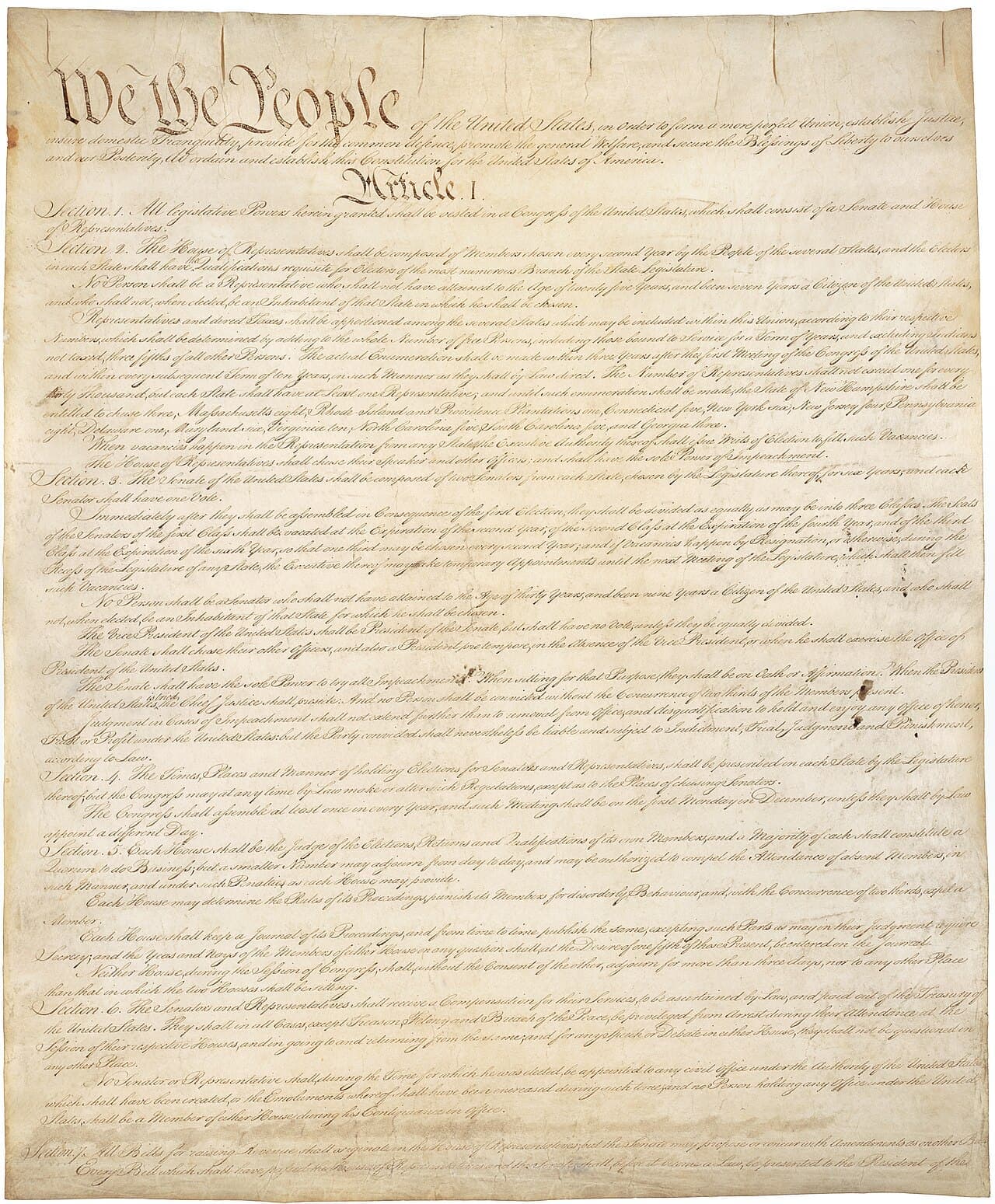
The delegates had been sent to revise the Articles of Confederation. That was the mandate in the resolution that called them, and in the credentials most of them carried. Within a week of reaching a quorum they had effectively set the Articles aside and begun drafting a replacement.
This was not a small liberty. Several delegates objected at the time on precisely those grounds, and a few left. The convention's answer was procedural nerve: it wrote its own ratification rule into the document, specifying that approval by nine state conventions would bring it into force — bypassing the state legislatures whose unanimous consent the Articles required to amend them.
Four months of trading
The substantive fight was between large states, who wanted representation by population, and small ones, who wanted it by state. It stalled the convention for weeks and was resolved by the compromise now attached to Connecticut: a lower house by population, an upper house with two seats per state regardless of size.
The second bargain was uglier and is the reason the document is argued about rather than simply admired. In counting population for representation, three-fifths of the enslaved population of a state would be counted — people with no vote, inflating the representation of the men who held them. The convention also agreed to bar Congress from prohibiting the slave trade for twenty years.
Thirty-nine of the delegates present at the end signed. Three who had stayed the course refused.
What people get wrong
The building was not called Independence Hall — that name came later, in the nineteenth century. More substantially, the convention was not a gathering of the founding generation's full front rank. Jefferson was in Paris and John Adams in London; both followed by letter. Patrick Henry, elected as a delegate, declined to attend, saying he “smelt a rat.” The room that wrote the Constitution was missing several of the people most associated with the era.
Madison arrived eleven days early with a draft. By the time the room was full, his plan was the thing being argued about.