Lee's army had been retreating west for a week, was surrounded, and was out of food. He sent a note through the lines asking for terms. Grant, who was travelling with a migraine and without his dress uniform, replied that he would meet him wherever Lee chose.
Finding a room
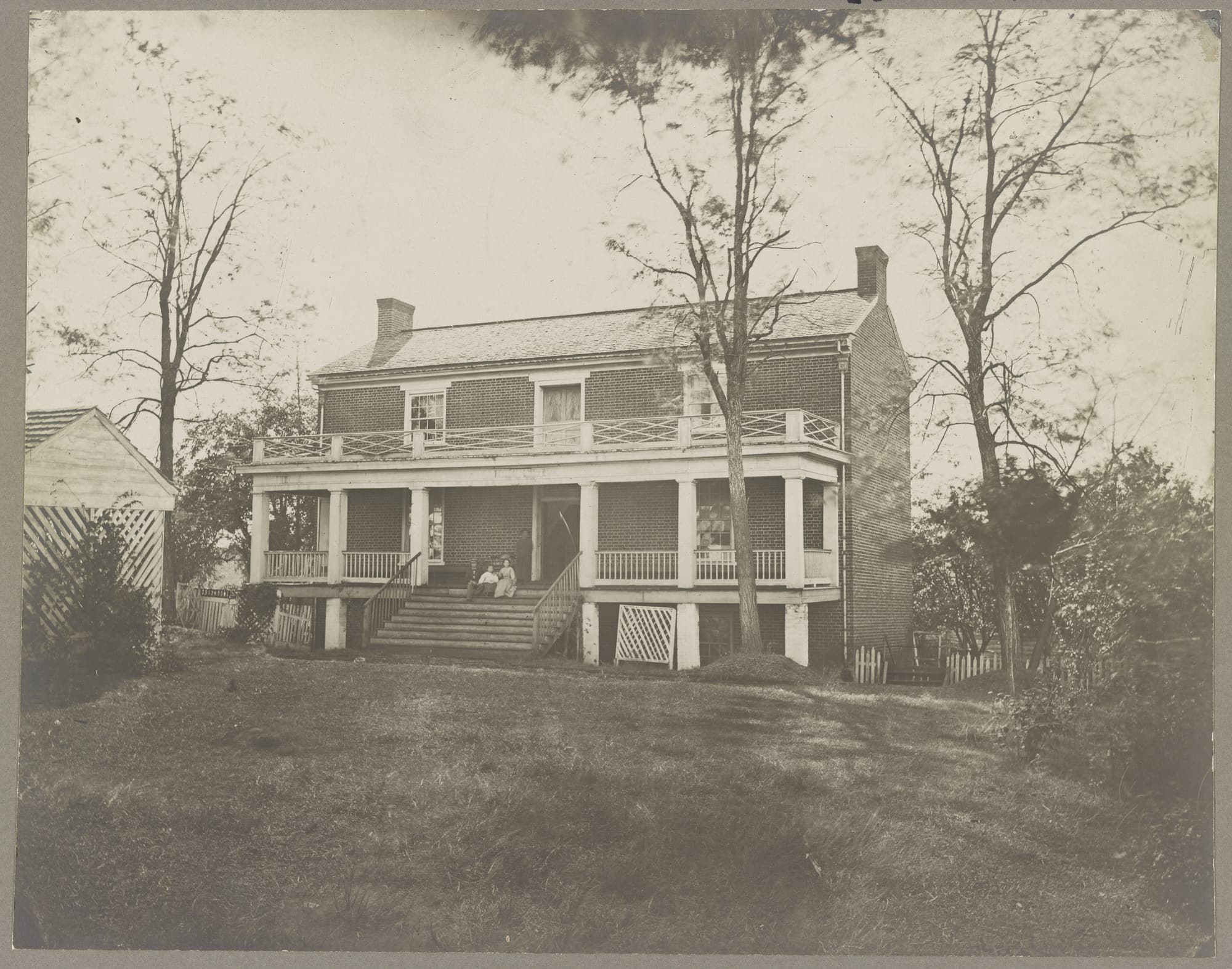
An aide was sent into the village of Appomattox Court House to find somewhere suitable and stopped the first man he met, Wilmer McLean, who offered his own house. McLean had moved his family there from Manassas specifically to get away from the fighting, which had begun near his previous home in 1861.
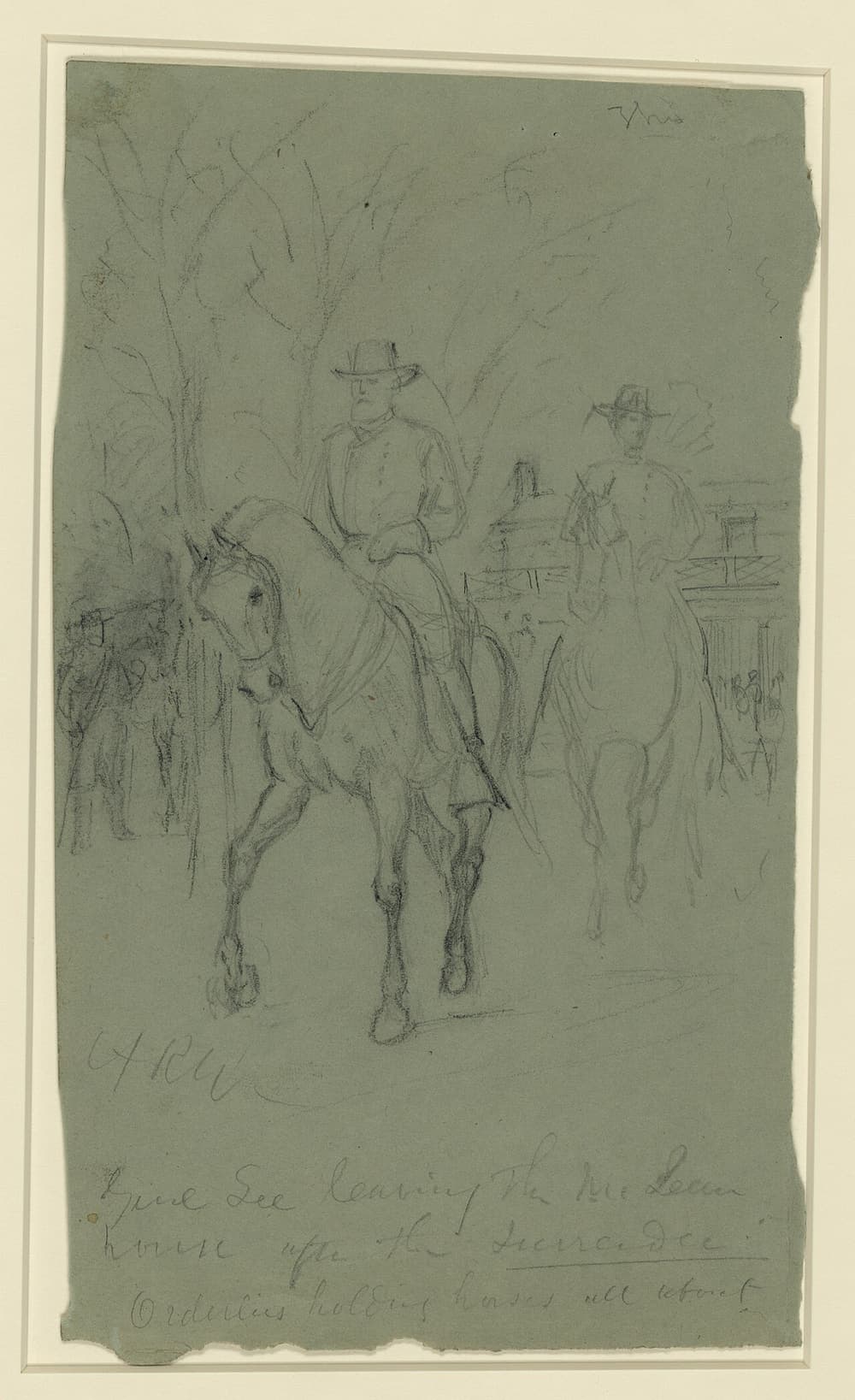
Lee arrived first, in a new dress uniform with a presentation sword. Grant arrived in a mud-spattered private's coat with his shoulder straps on it, apologised for his appearance, and then spent a while talking about the Mexican War, where the two had met before, until Lee brought him back to the point.
The terms fit on a page
Grant wrote them out longhand while Lee waited: officers and men to be paroled, arms and artillery surrendered, officers to keep their sidearms and personal baggage, and every man to go home undisturbed so long as he observed the parole.
Lee mentioned that in his army the cavalry and artillerymen owned their own horses. Grant, without amending the written terms, said he would instruct the parole officers to let any man claiming a horse or mule keep it, on the grounds that they would need them to put in a crop. Lee said it would have a happy effect.
Grant also sent 25,000 rations across to the Confederate lines, because they had none.
No ceremony, on purpose
Union batteries began firing salutes when the news reached them and Grant ordered them stopped: the rebels were their countrymen again. There was no formal surrender pageant, no procession, no sword handed over — the sword story is an invention.
It did not end the war on paper — other Confederate armies surrendered over the following weeks and the last did not give up until June — but Appomattox is where it ended in practice, largely because of how it was conducted.
Wilmer McLean's parlour was stripped by souvenir hunters within hours; officers simply took the furniture, some of them leaving money behind.
What people get wrong
Lee did not surrender his sword and Grant did not refuse it — Grant explicitly wrote that officers would keep their sidearms so the question never arose, and both men's accounts say nothing of the kind happened. The meeting also did not take place at a courthouse: "Appomattox Court House" is the name of the village. And it surrendered one army, not the Confederacy; Johnston's army held out until 26 April.
He had moved his family away from the fighting once already. It caught up with him and used his front room.