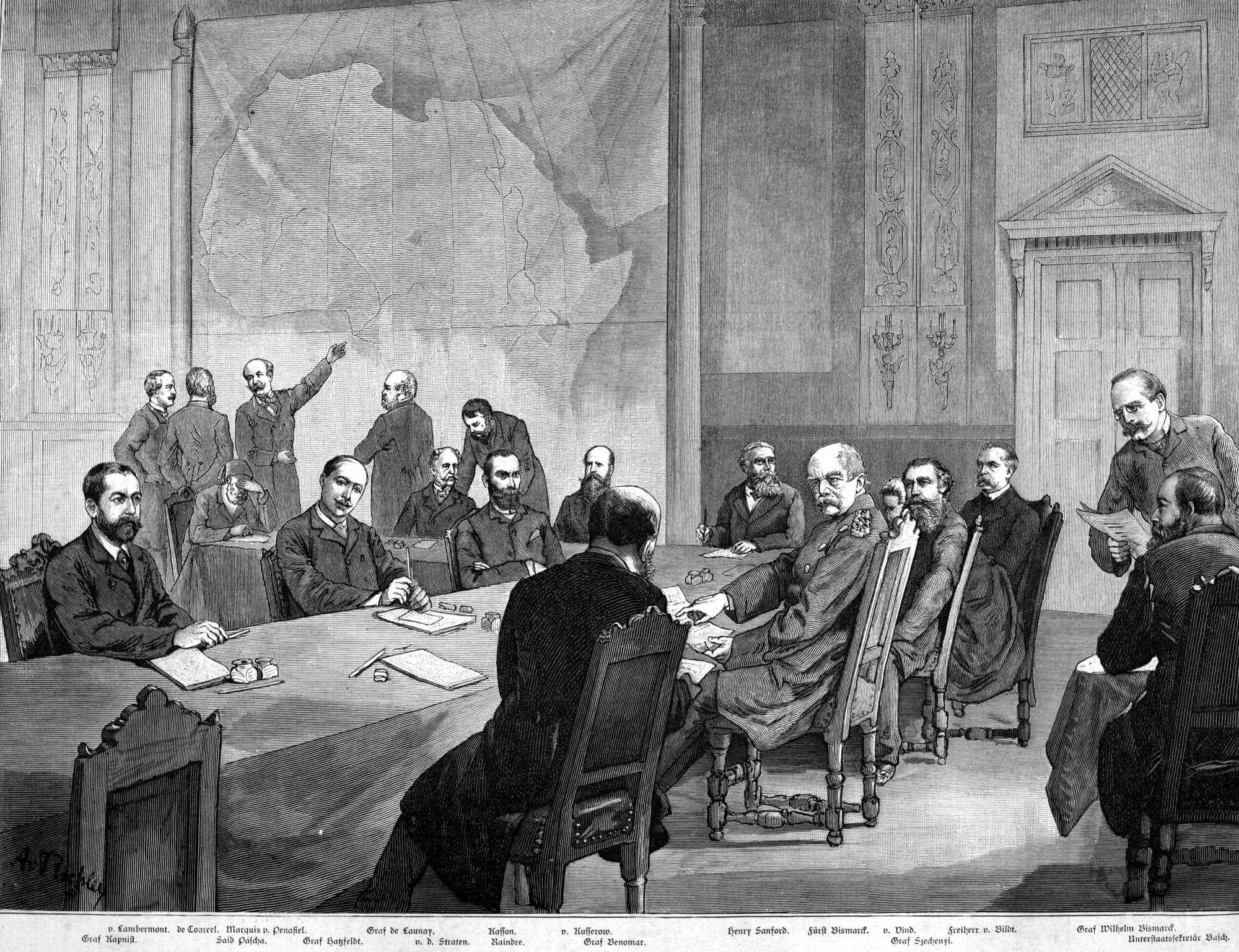
European claims in Africa were colliding, and Bismarck — who had until recently been sceptical of colonies altogether — offered Berlin as neutral ground to settle the procedure. The conference sat for three months in a room with a very large map on the wall.
What it actually agreed
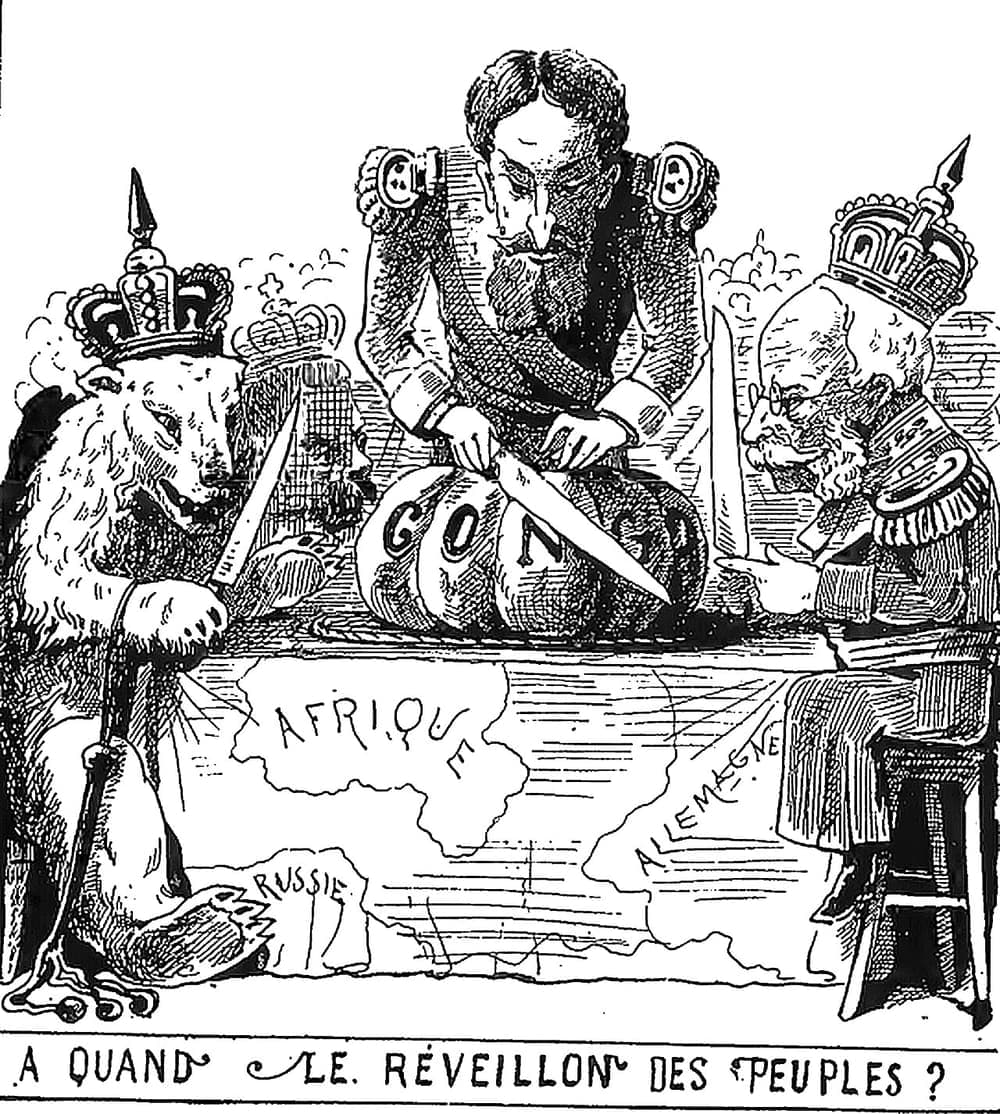
Less than the shorthand suggests. The General Act did not draw the borders of Africa; it set the rules by which claims would be recognised, chiefly the principle of effective occupation — that a power had to demonstrate administration on the ground and notify the others, rather than simply assert a claim from a ship.
It also declared free navigation on the Congo and Niger, and committed the signatories to suppressing the slave trade, in language that was used afterwards to justify almost anything.
The practical effect of a rules-of-procedure meeting was to start a race. If occupation was what counted, then everyone needed to occupy, quickly, and the two decades after Berlin saw almost the entire continent claimed.
Leopold's private state
The most consequential single outcome was recognition of the Congo Free State — not as a Belgian colony but as the personal property of King Leopold II, obtained through a front organisation presented as humanitarian and scientific.
What followed there over the next twenty years, driven by rubber quotas enforced by mutilation and hostage-taking, is among the worst episodes of the colonial period, and it was made possible by a signature obtained in this room.
The absence
Fourteen delegations attended: the European powers, the Ottoman Empire and the United States. Not one African state or people was represented, consulted or notified, including states with long-standing diplomatic relations with the parties present.
It is the most complete example of a pattern that runs through this whole archive — that the substance of a meeting is often decided by the invitation list, long before anyone sits down.
What people get wrong
The conference did not partition Africa and no map was carved up around that table; the borders were drawn afterwards, in dozens of separate bilateral treaties over the following twenty years. What Berlin did was agree the ground rules — and by making effective occupation the test of a valid claim, it turned a slow scramble into a fast one. Blaming the borders on this meeting is both too much credit and too little.
Fourteen delegations, three months, one continent, and not one person from it in the room.