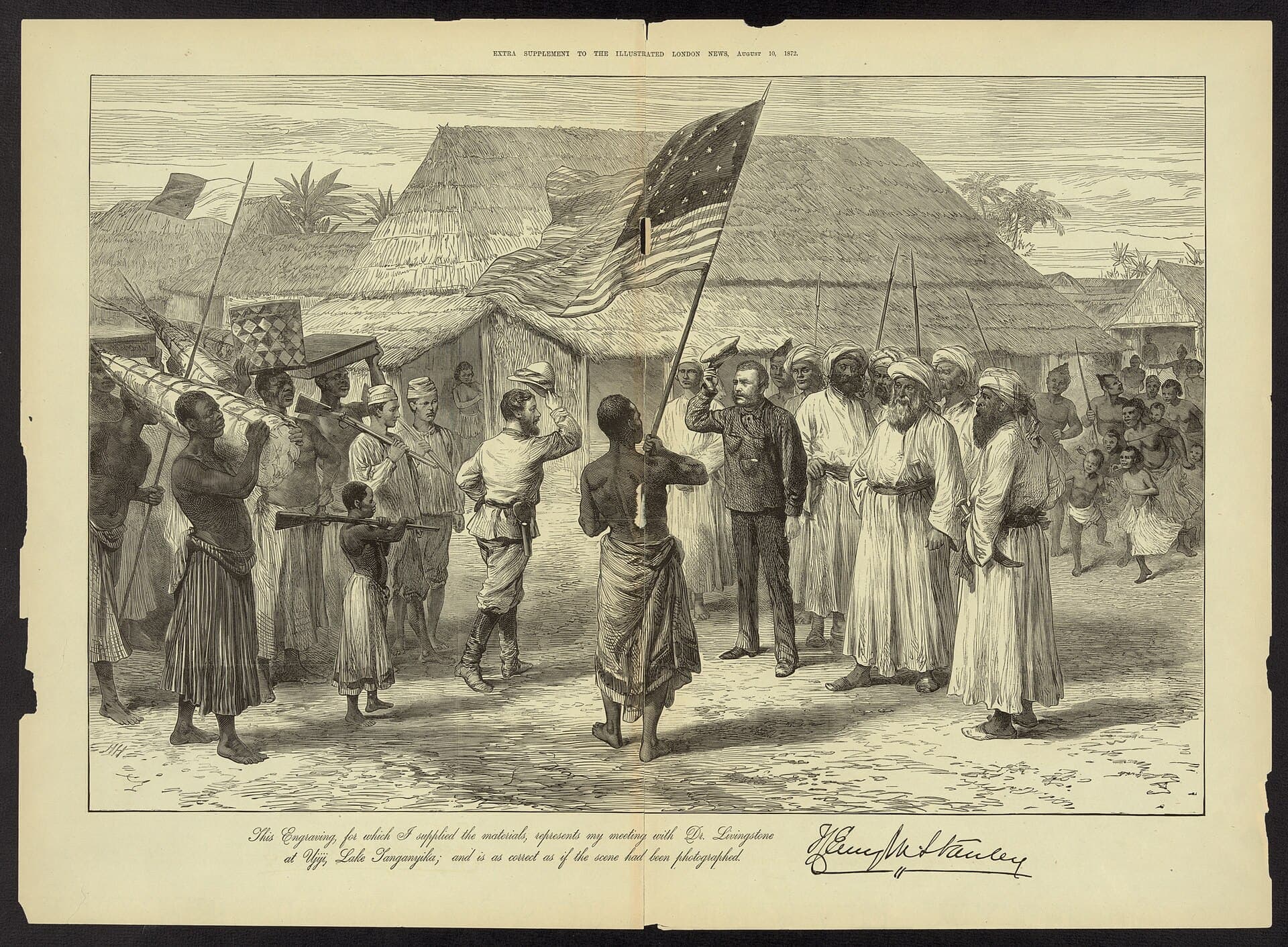
David Livingstone had not been heard from in years. He was somewhere in central Africa, or he was dead, and there was no method available to anyone that could distinguish between the two. So a newspaper decided to go and look.
A commission with no address
James Gordon Bennett Jr. ran the New York Herald and understood that a search is a better story than a discovery, because it can be serialised. He engaged Henry Morton Stanley — a Welsh-born journalist who had reinvented himself in America — with an instruction of remarkable simplicity: find Livingstone.
There was no location to go to. Livingstone had gone inland in 1866 looking for the source of the Nile and letters had stopped arriving. The last confirmed sightings were years old and thousands of miles apart. Stanley's plan amounted to reaching the interior and asking.
Eight months of asking
The expedition set out from the coast in March 1871: a large column of porters, guards and supplies, moving at the speed of the slowest load. Stanley's own account is a catalogue of the things that go wrong on that kind of journey — fever, desertion, disputes over payment, the constant business of negotiating passage with whoever controlled the next stretch of country.
His method was to follow rumour. An old white man with books, somewhere west. The information was months stale by the time it reached him and frequently wrong, and he had no way to verify any of it until he arrived. In November, at the settlement of Ujiji on the eastern shore of Lake Tanganyika, the rumours resolved into a thin, grey-bearded man who had been living there for some time.
What was said
The greeting Stanley reported — “Dr. Livingstone, I presume?” — is the most quoted sentence in the history of exploration, and quite possibly was not said. Livingstone's own journal, which is otherwise detailed about the encounter and plainly moved by it, does not mention it. The pages of Stanley's diary covering the meeting were later torn out. Stanley himself was a journalist who knew the value of a line.
What is not in doubt is that Livingstone was in serious trouble. His supplies had been stolen, he was ill, and he was dependent on the goodwill of the people around him. Stanley had arrived with medicine, food and mail — the first letters Livingstone had received in years.
He would not come home
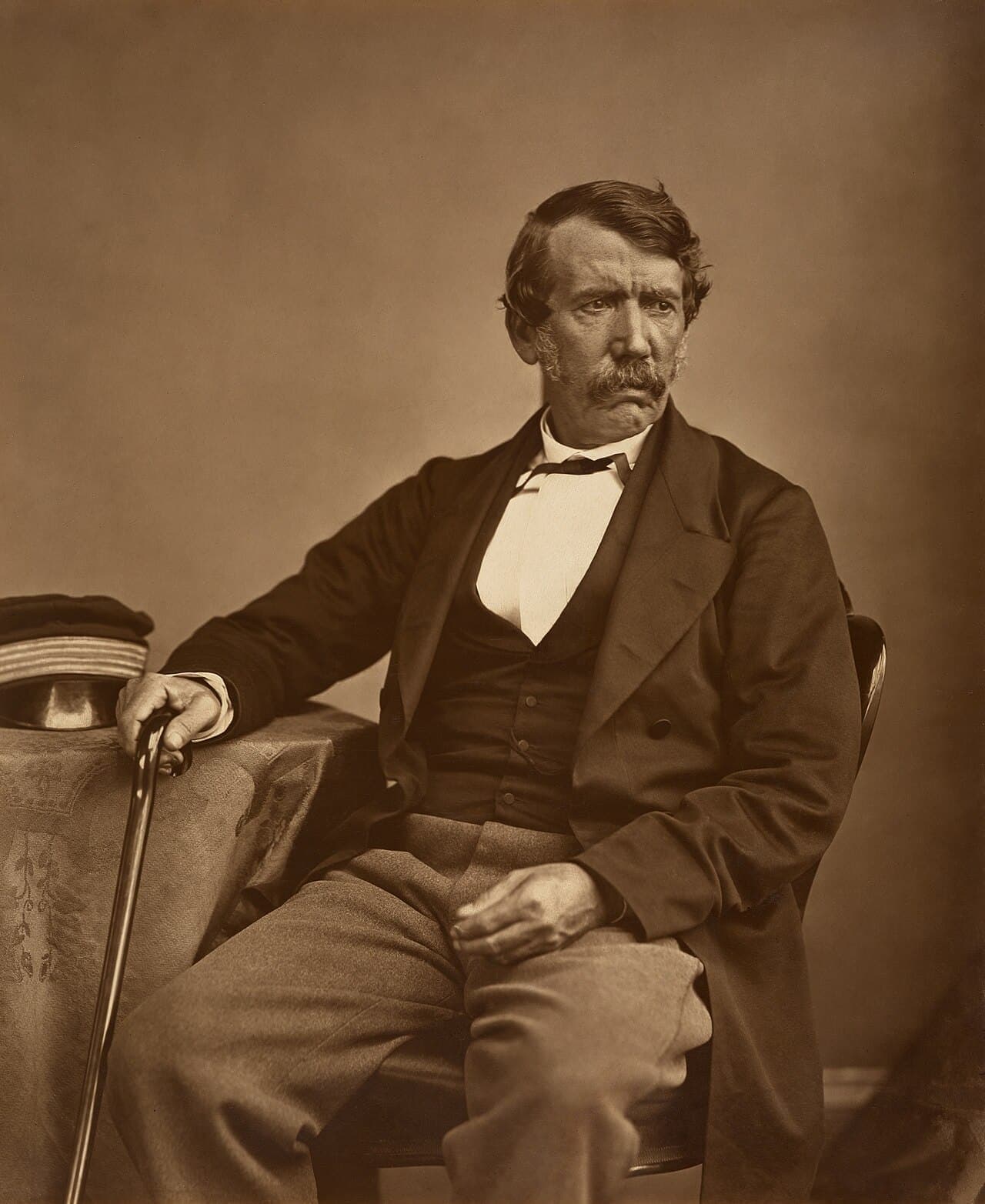
The two men spent about four months together and explored the north of the lake, establishing that it did not drain towards the Nile — which was the question Livingstone had gone in to answer, and the answer he did not want.
Stanley then went back to the coast and Livingstone stayed. He had been offered a rescue and declined it. He died about eighteen months later, still looking, and his companions carried his body more than a thousand miles to the coast so it could be sent home.
Stanley, meanwhile, filed. The story ran and made him famous, and he returned to Africa repeatedly — increasingly in the service of King Leopold II of Belgium, whose private colonisation of the Congo produced one of the worst atrocities of the century. The meeting is remembered as an adventure. What it opened was something else.
What people get wrong
Livingstone was not lost, in the sense of not knowing where he was. He was out of contact — which is a different condition, and one that barely exists any more. He knew roughly where he stood; he could not send word out or receive word in, and the people who wanted to reach him had no way of establishing whether the effort was worth making. Most of the drama of the story comes from a gap between two people that was informational rather than geographical.
There was no date, no venue and no confirmation the other party was alive. Everything else was detail.