The war had killed something close to twenty million people. Delegations arrived in Paris from across the world, many with maps and memoranda prepared for years. The Germans were not invited to negotiate; they were summoned at the end to be handed the result.
The Council of Four
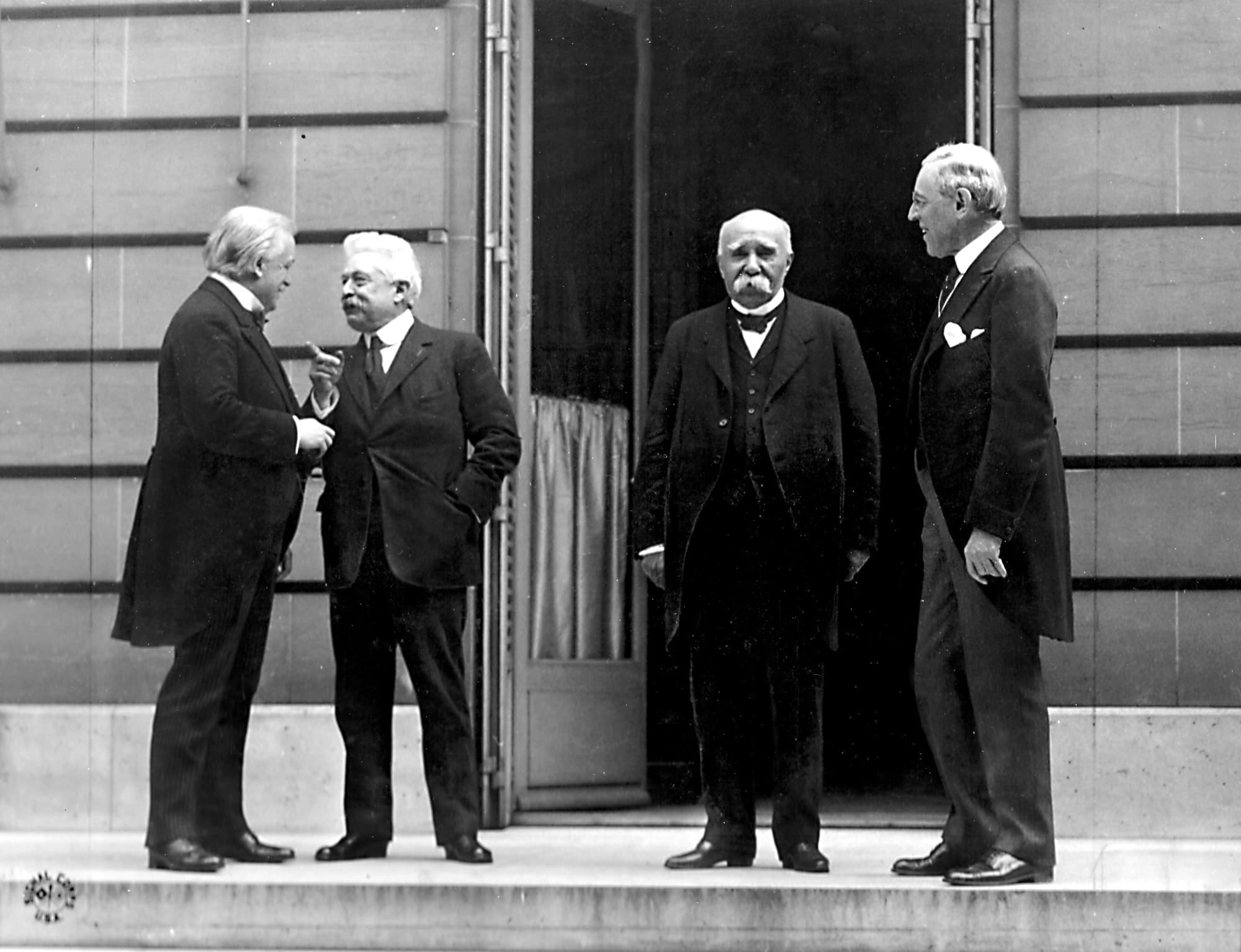
The formal structure was a plenary conference. It met rarely and settled almost nothing. Real business moved first to a Council of Ten, then — because ten was still too many to talk freely — to a Council of Four: Wilson for the United States, Lloyd George for Britain, Clemenceau for France and Orlando for Italy.
Orlando walked out in April over Fiume and came back to find decisions had been taken without him, which is the standard fate of the fourth person in a group of four. For much of the crucial period it was three men in a room, often with only an interpreter present and no secretariat, which is why the record of some of the most consequential conversations of the century is thin.
The venue was the message
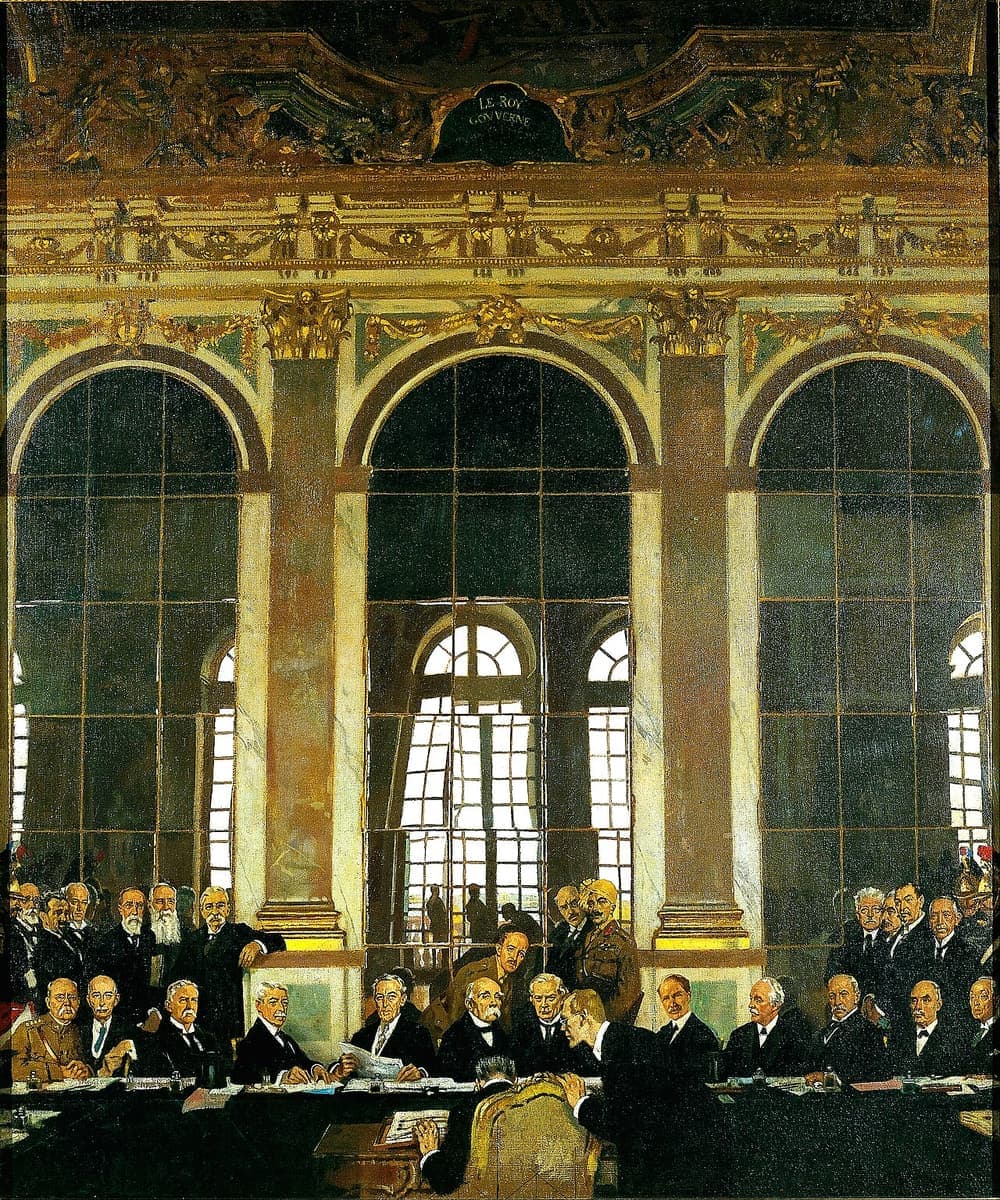
Signing was staged in the Hall of Mirrors at Versailles, chosen because it was where the German Empire had been proclaimed in 1871 after the Franco-Prussian war. It was a deliberate reversal, and everyone involved understood it as one.
The two German signatories were brought in, signed, and were taken out again. There was no negotiation of the terms at any point.
What it produced
The Treaty of Versailles and four further treaties with the other defeated powers; new states across central Europe; mandates carving up the Ottoman territories; and the League of Nations, which the United States then declined to join because Wilson could not carry his own Senate.
The conference also received petitions from delegations it would not hear — among them a young Vietnamese man calling himself Nguyễn Ái Quốc, later known as Hồ Chí Minh, who asked for civil rights for the people of French Indochina and got no reply.
What people get wrong
The claim that the reparations bill caused the Second World War is far too neat. Germany paid a fraction of what was assessed, the sum was rescheduled twice, and payments had effectively stopped by 1932 — before Hitler took power. Economists have argued since the 1970s that the burden was manageable and the political humiliation, especially the war-guilt clause and the exclusion from the negotiations, did the real damage. It was the process, not the arithmetic.
Thirty-two delegations came. The decisions were taken by three men and an interpreter, with no minutes.