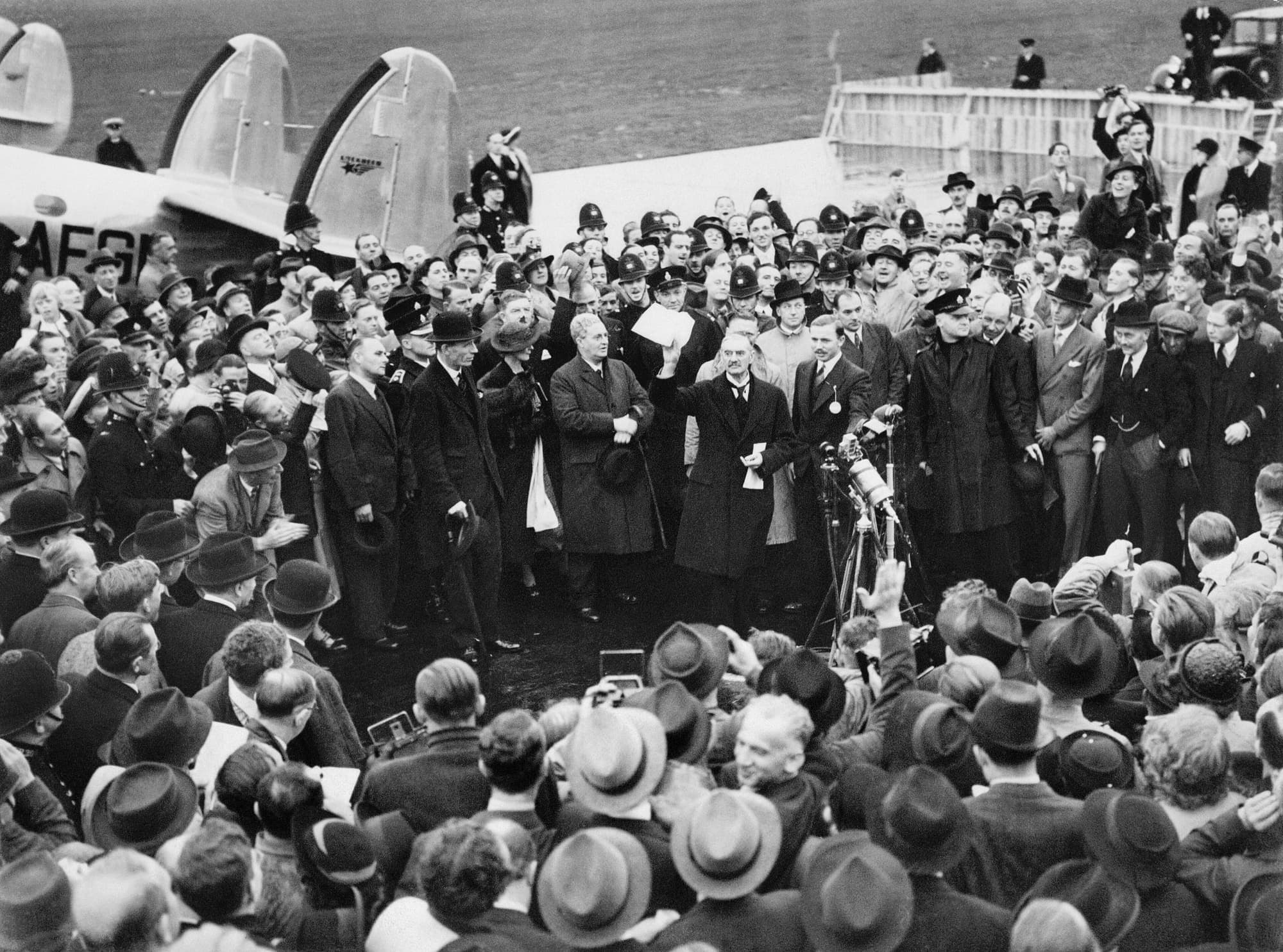
Hitler had demanded the Sudetenland, the German-speaking border region of Czechoslovakia, which also happened to contain the country's frontier fortifications. Chamberlain had already flown to Germany twice in three weeks. The third meeting, brokered by Mussolini, took place overnight in Munich.
Waiting in the hotel
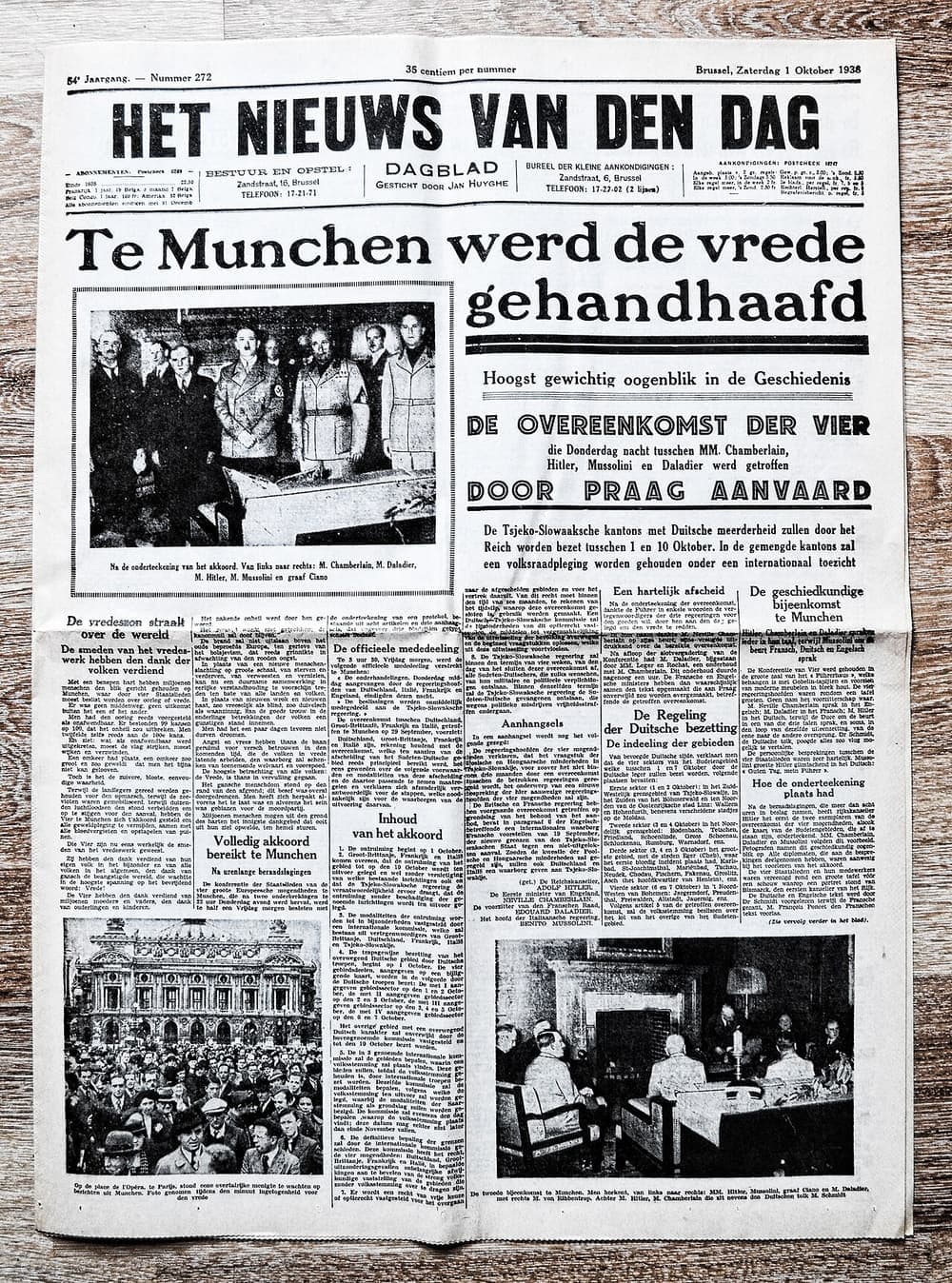
Two Czechoslovak diplomats travelled to Munich and were kept at their hotel under effective guard while the four powers decided the borders of their country. They were brought in after one in the morning, handed a map, and told the terms were not open to discussion.
Czechoslovakia had a defence treaty with France and one with the Soviet Union contingent on the French acting. The Soviets were not invited to Munich either, a fact that did a great deal to shape Stalin's calculations over the following year.
The piece of paper
The agreement itself transferred the territory on a timetable. Separately, Chamberlain asked Hitler to sign a short declaration that their two countries would never go to war again — a private document with no legal weight, drafted by Chamberlain, which Hitler signed without much interest.
That is the paper Chamberlain waved at Heston aerodrome. He read it out and said he believed it was peace for our time — a phrase he had used in the doorway of Downing Street, and one he came to regret almost immediately.
Five months
German troops occupied the Sudetenland in October. In March 1939 Germany took the rest of Bohemia and Moravia, which the agreement had explicitly guaranteed. Britain and France gave a guarantee to Poland the same month, and the war began in September.
The word Munich has been an argument-ender in foreign policy ever since — invoked, often lazily, whenever anyone proposes talking to an adversary.
What people get wrong
"Peace in our time" is a misquotation; Chamberlain said "peace for our time". The harder correction is the caricature of him as naive. He knew Britain's air defences were not ready — radar and Fighter Command were both a year from being usable — and there is a real argument that the delay mattered more to Britain than to Germany. That is a defence of the timing, not of the method: the specific, indefensible thing about Munich is that a country's territory was signed away by four governments in a room it was not allowed to enter.
They were brought in after one in the morning, handed a map, and told it was not open to discussion.