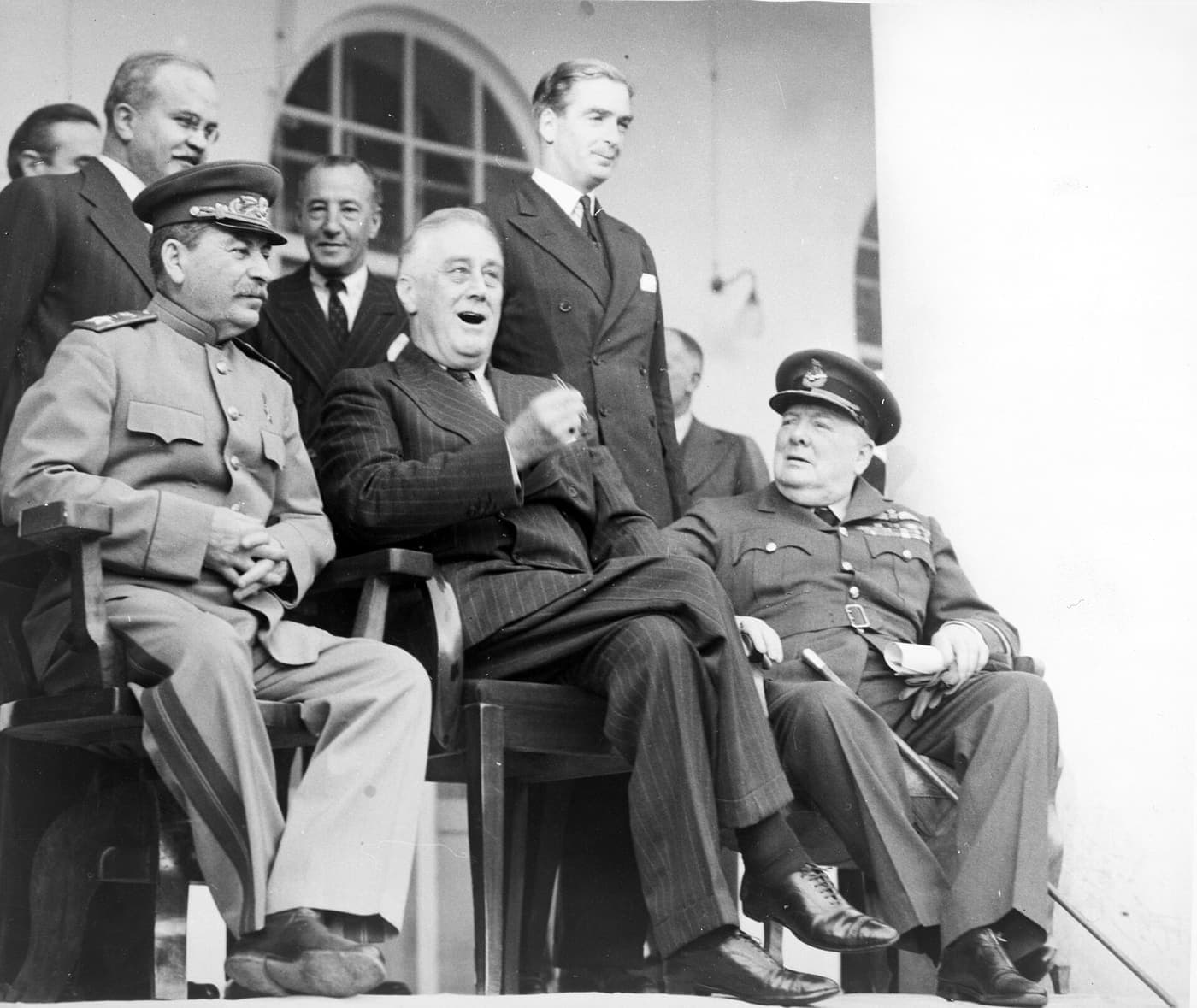
Getting the three of them into one city had taken most of a year. Stalin would not leave a place his own forces did not control, and would not fly far; Tehran, occupied jointly by Britain and the Soviet Union since 1941, was the compromise, and Roosevelt travelled most of the way by ship and then by air.
The accommodation question
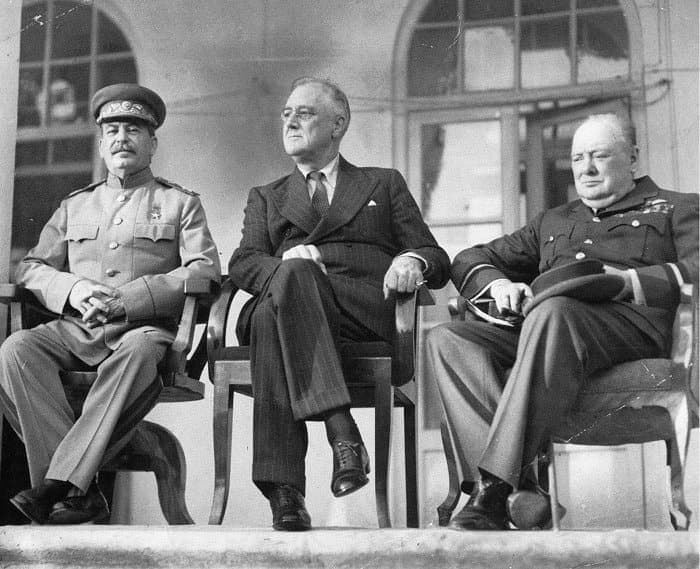
On arrival Roosevelt was staying at the American legation, some distance across the city. Molotov reported an assassination plot and invited him to move into a building inside the Soviet compound, next to the conference room. Roosevelt accepted.
It removed a genuinely risky daily journey. It also meant the American president spent four days living inside a Soviet facility, and it gave Stalin an easy walk to Roosevelt's rooms for the private conversations that Churchill was not part of. Both things are true, and the American delegation debated which mattered more at the time.
Churchill, who turned 69 during the conference, noticed. He later described sitting between the great Russian bear and the great American buffalo with only a poor English donkey who knew the way home.
What was settled
A firm commitment to Operation Overlord in May 1944, with a supporting landing in southern France — which ended a long argument in which Churchill had pushed for the Mediterranean instead and lost, two votes to one.
A Soviet undertaking to enter the war against Japan once Germany was beaten. Support for Tito's partisans in Yugoslavia. A declaration on Iranian independence. And an initial, unresolved discussion of Poland's post-war borders, sketched by Churchill with three matchsticks on the table.
The pattern for Yalta
Tehran set the shape that Yalta would follow fourteen months later: three principals, no agreed agenda, decisions taken in private conversations and then reported to the delegations, and very few binding words on paper.
It also set the alignments. On the questions that mattered most to him, Stalin got what he wanted at Tehran, and by the time of Yalta the Red Army was in occupation of the territory under discussion.
What people get wrong
The three did not divide Europe into spheres at Tehran; that shorthand belongs to a later Churchill–Stalin conversation in Moscow in 1944 and, in the popular imagination, to Yalta. Tehran's real business was military. It is also often said Roosevelt was tricked into the Soviet embassy — the assassination warning was real enough to be taken seriously by both delegations, though the size of the threat has been argued over ever since.
He moved into the Soviet compound for four days. It removed a dangerous drive, and it put Stalin one corridor away.