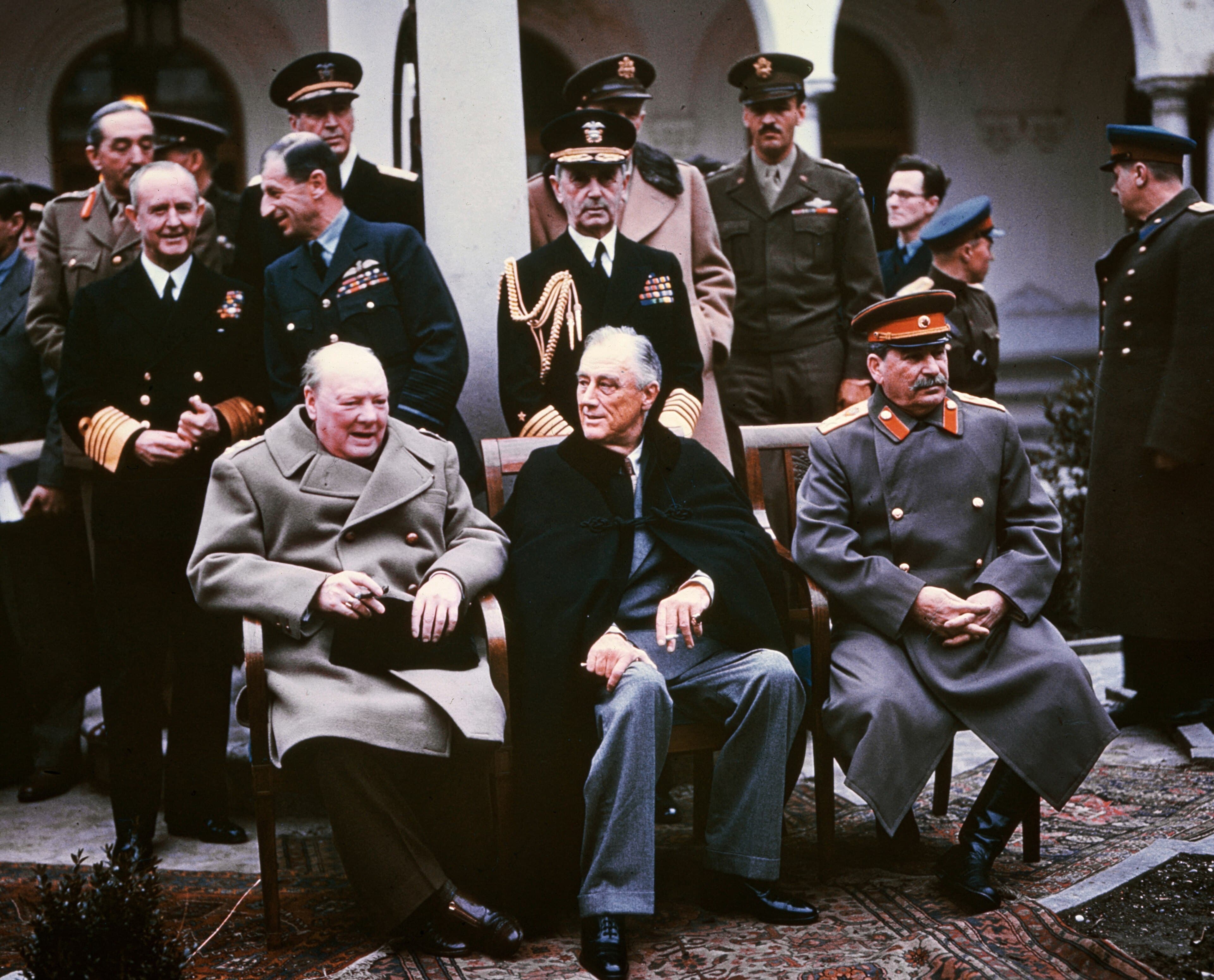
Germany had not surrendered, Japan was still fighting, and the three men who would decide what came next had never all been in a room together more than once before. They chose a bombed-out resort on the Black Sea, and getting there was most of the difficulty.
The journey was the hard part
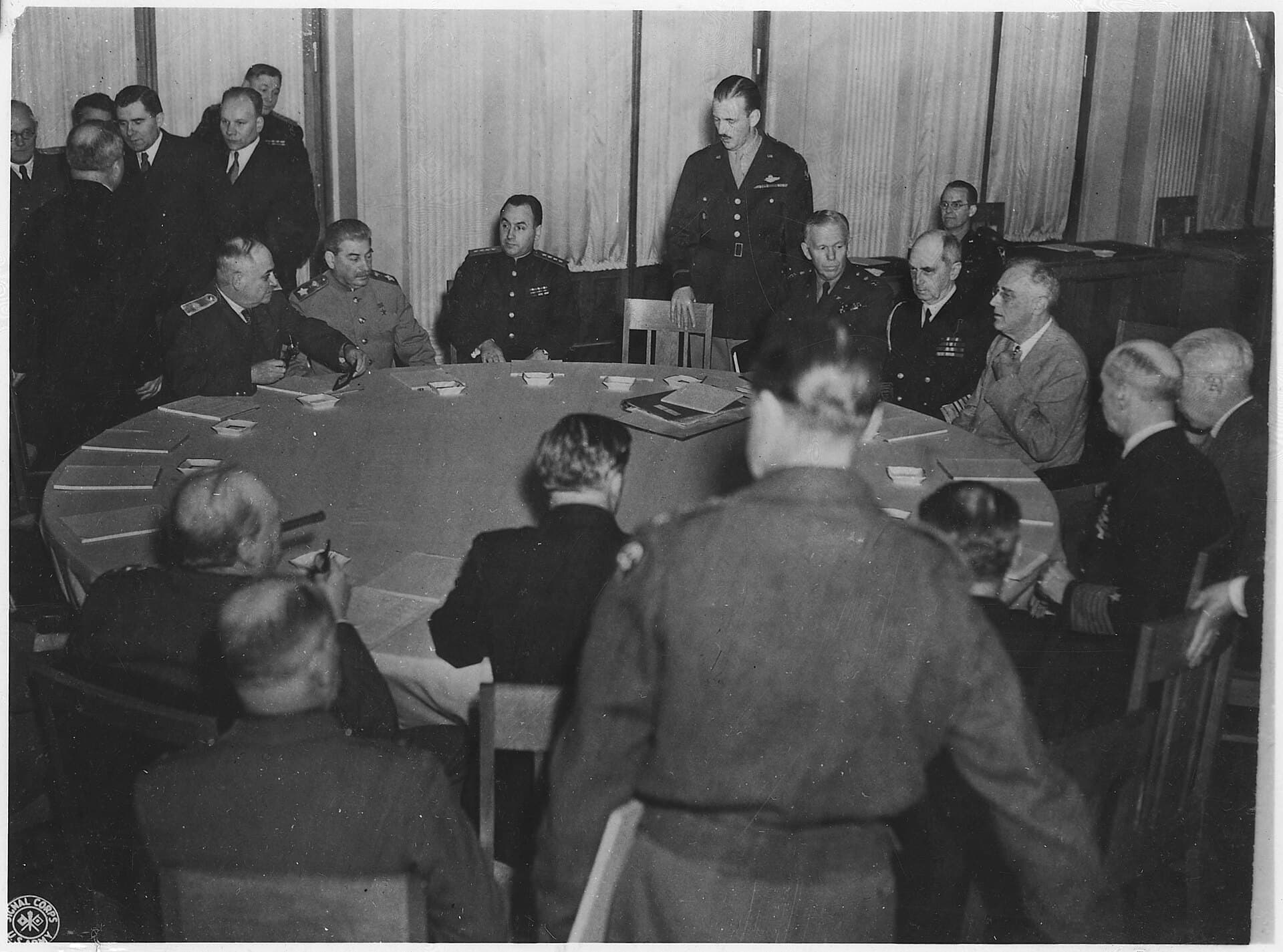
The venue was set by Stalin's refusal to travel outside Soviet territory — he had flown to Tehran in 1943 and had no intention of going further again, citing his health and the direction of the war. That left Crimea, retaken from German occupation only nine months earlier, with the palaces around Yalta stripped and the roads in poor condition.
Roosevelt, who was gravely ill, crossed the Atlantic by warship to Malta, flew from there to an airfield in Crimea, and was then driven for hours over mountain roads to the coast. The British and American delegations brought their own accommodation arrangements because there was not enough intact housing.
Three delegations, three palaces
The Americans were put in the Livadia Palace, the old summer residence of the last Tsar, which also hosted the plenary sessions — a convenience for Roosevelt, whose health made moving about difficult, and an advantage the other two delegations noticed. Churchill and the British were housed at the Vorontsov Palace at Alupka, a half-hour's drive along the coast. Stalin took the Yusupov Palace at Koreiz, in between.
None of the buildings had come through the occupation well. Furniture, fittings and staff were shipped down from Moscow hotels to make them habitable, and accounts from the British and American parties dwell at some length on the insect life. Whatever else Yalta was, it was not comfortable.
The geography mattered more than it sounds. Being spread across three houses on a mountainous coast meant the informal contact that usually does the real work of a summit — the corridor conversation, the drink after dinner — had to be scheduled and driven to. Most of the eight days ran on a fixed daily plenary, and the rest was arranged in advance.
What was actually agreed
The published protocol covers a defined set of items. Germany would be occupied in zones, with a French zone carved from the British and American shares. A conference would convene at San Francisco in April 1945 to found the United Nations, and the voting arrangement for its Security Council was settled at Yalta. The Soviet Union undertook to enter the war against Japan within months of Germany's surrender.
The three also issued a Declaration on Liberated Europe, promising representative governments and free elections in the countries being freed from German control. It is the shortest of the Yalta texts and the one that did the most damage to the conference's reputation, because of the distance between what it promised and what followed.
The part that was never written down
Poland occupied more of the conference's time than any other subject and produced its least durable language. The borders were moved westward; the composition of the future Polish government was left to a formula about reorganising the existing provisional administration on a broader democratic basis, with free elections to follow.
That wording was vague enough for each delegation to leave believing something different, which is a recognisable failure mode for any meeting that runs out of time before it runs out of disagreement. What Yalta did not do was assign Eastern Europe to anyone. The armies were already where they were, and the settlement that followed owed more to that fact than to anything signed at Livadia.
Eight days, and no way to reschedule
The conference had been months in the arranging, conducted by cable between three capitals, and the dates were effectively immovable once travel on that scale had been committed. Roosevelt died nine weeks after leaving Crimea; by the time the Allies met again at Potsdam in July, two of the three principals were different men.
That is the real scheduling lesson in Yalta, and it is not a comfortable one: the meeting happened when it did because a narrow window existed, and the window closed.
The argument that outlived everyone in the room
Within a few years “Yalta” had stopped being the name of a conference and become the name of an accusation. In American politics it was shorthand for a sell-out; in Central and Eastern Europe it became shorthand for having been handed over. Both readings treat eight days of talks as the moment the next forty years were decided.
The texts do not support that, and neither does the map. By February 1945 the Red Army held most of Poland and was closing on the Oder; Anglo-American forces had not yet crossed the Rhine. The negotiating position each delegation brought to Livadia was set by where its soldiers already stood, and no wording agreed in a palace was going to move them.
What Yalta did produce was a written promise of free elections that was not kept, which is a different and more specific charge. It is also the reason the conference is still argued about: it left a document you can hold up against what happened next.
What people get wrong
The “percentages agreement” — Churchill's half-sheet of paper allocating influence in the Balkans by percentage, which Stalin marked with a blue tick — is routinely placed at Yalta. It happened at neither Yalta nor Potsdam. Churchill describes it in his own account of a meeting with Stalin in Moscow in October 1944, several months earlier and with Roosevelt not present.
Yalta did not divide Europe. The armies were already where they were; the conference wrote language that failed to change it.