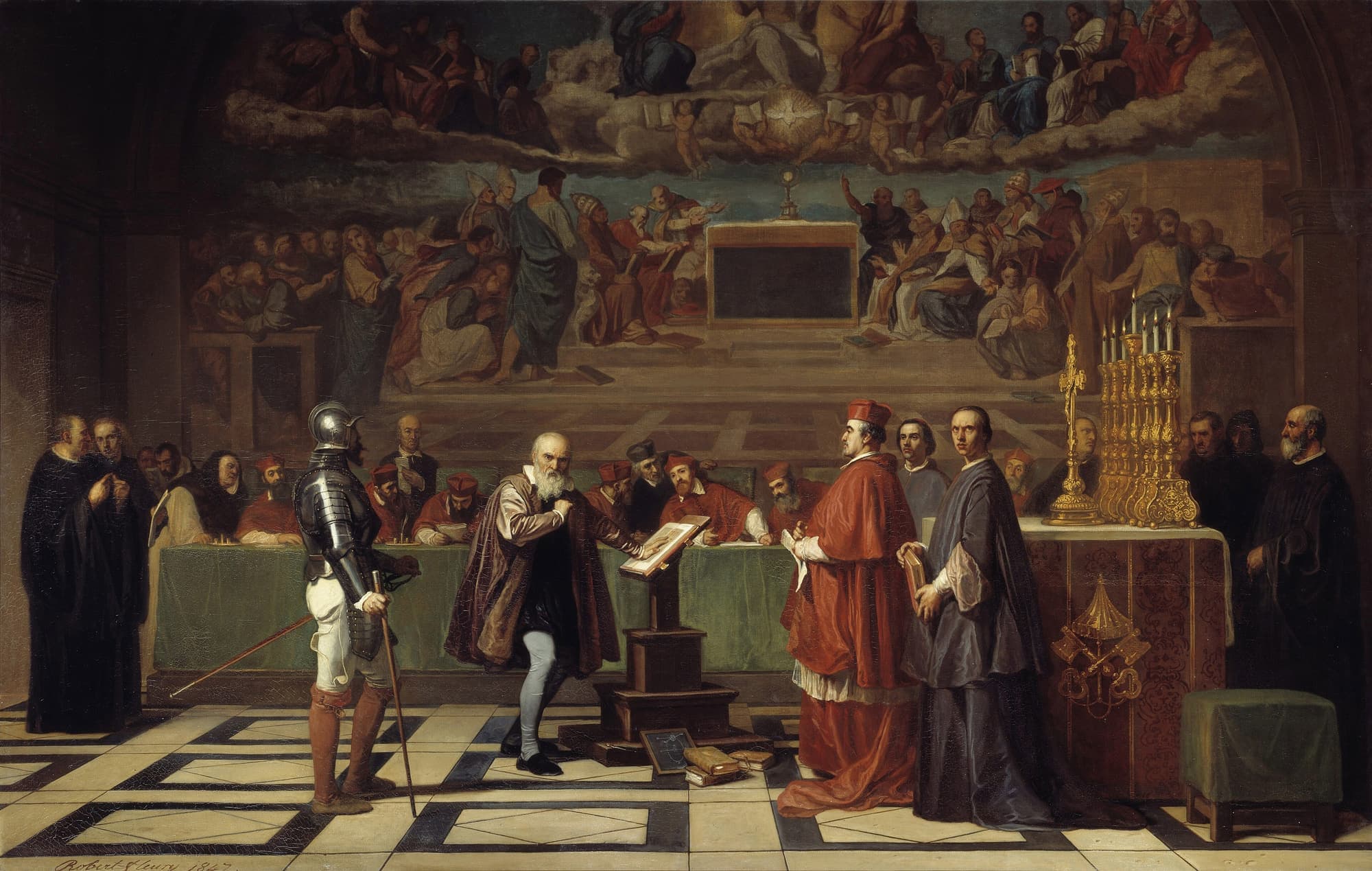
Galileo had published the Dialogue Concerning the Two Chief World Systems in 1632, with permission from the censors. It presented the Copernican and Ptolemaic systems as a conversation, and the case for the earth moving came off considerably better. He was summoned to Rome in the autumn.
The disputed file note
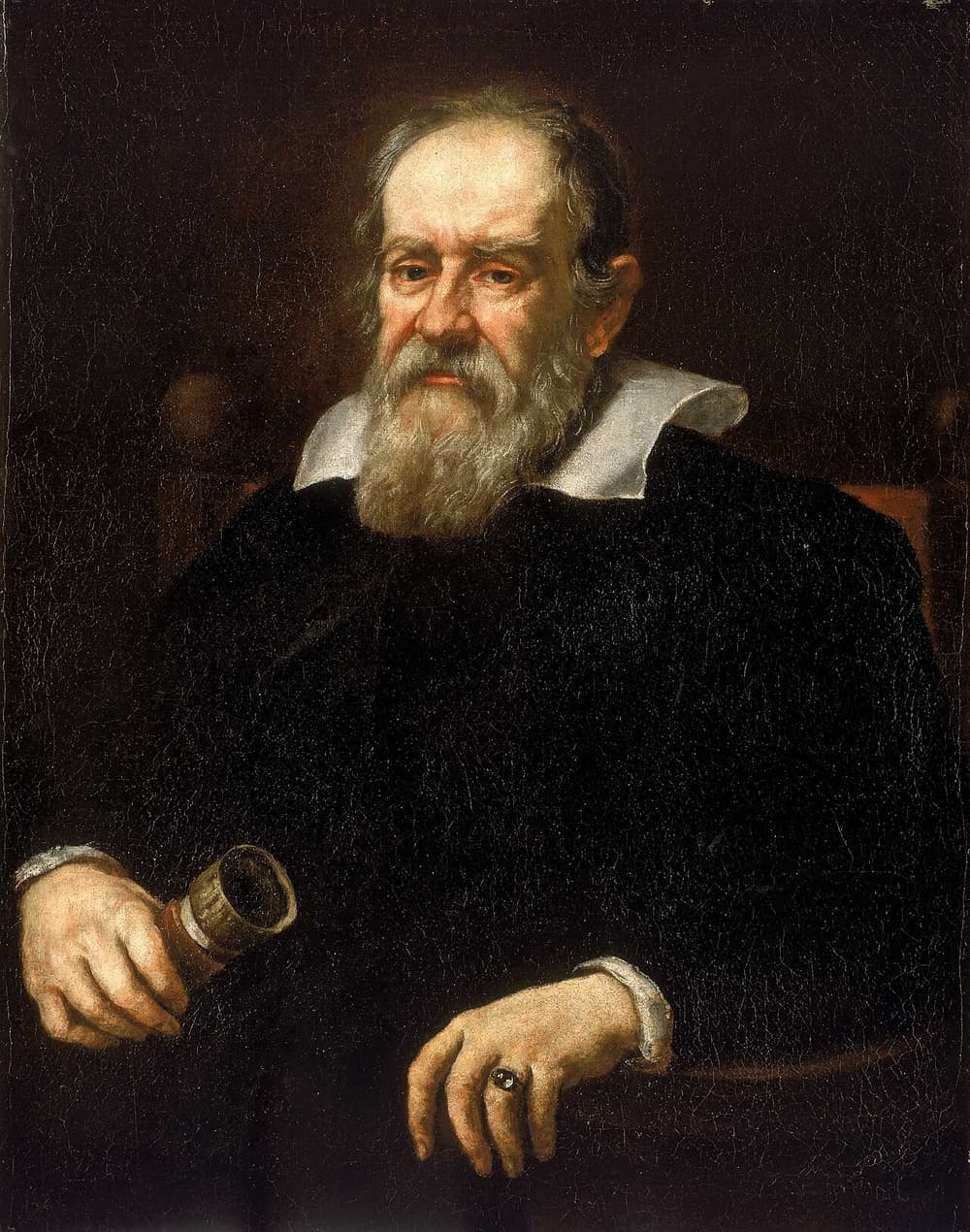
In 1616 Galileo had been called in by Cardinal Bellarmine and told the Copernican position could not be held or defended. Bellarmine gave him a signed certificate afterwards saying he had not been made to abjure anything and had simply been informed of the ruling.
In the file there was also an unsigned, unwitnessed memorandum saying he had been ordered not to hold, teach or defend the doctrine in any way whatsoever. Those are materially different instructions, and the whole case turned on which one had actually been given in that room seventeen years earlier.
Galileo produced Bellarmine's certificate. The prosecution produced the memorandum. Bellarmine had been dead for twelve years.
A negotiated ending
Between hearings there was an arrangement — recorded in the proceedings — in which Galileo would concede that the book had gone further than he intended, in exchange for the more serious charges being dropped. He duly told the court that on rereading his own book he could see how a reader might take it for an argument in favour, and that this had not been his intention.
It was not enough. The verdict found him vehemently suspect of heresy, required a public abjuration, banned the Dialogue, and sentenced him to imprisonment, immediately commuted to house arrest. He spent the last nine years of his life at his villa in Arcetri, where he wrote his best book on mechanics and had it smuggled out to a Dutch printer.
Why the meeting matters more than the astronomy
The scientific question was decided elsewhere and later, by better observations. What the 1633 hearings actually demonstrate is what happens when the only record of a critical conversation is contested: two documents, one signed and one not, describing the same meeting differently, with the only other participant dead.
The Church formally revisited the case in 1992, and the file has been public since 1998.
What people get wrong
He almost certainly never muttered "and yet it moves" — the line first appears in print more than a century later, and saying it in that room would have been suicidal. He was not imprisoned or tortured; the sentence was house arrest, in a comfortable villa, with visitors. And the trial was not a straightforward clash of science against religion: Galileo had friends and patrons inside the Church, including the pope, and much of what went wrong was personal and political, including his decision to put an argument the pope had asked him to include in the mouth of a character called Simplicio.
Two documents describing the same meeting, one signed and one not, and the only other man in the room seventeen years dead.