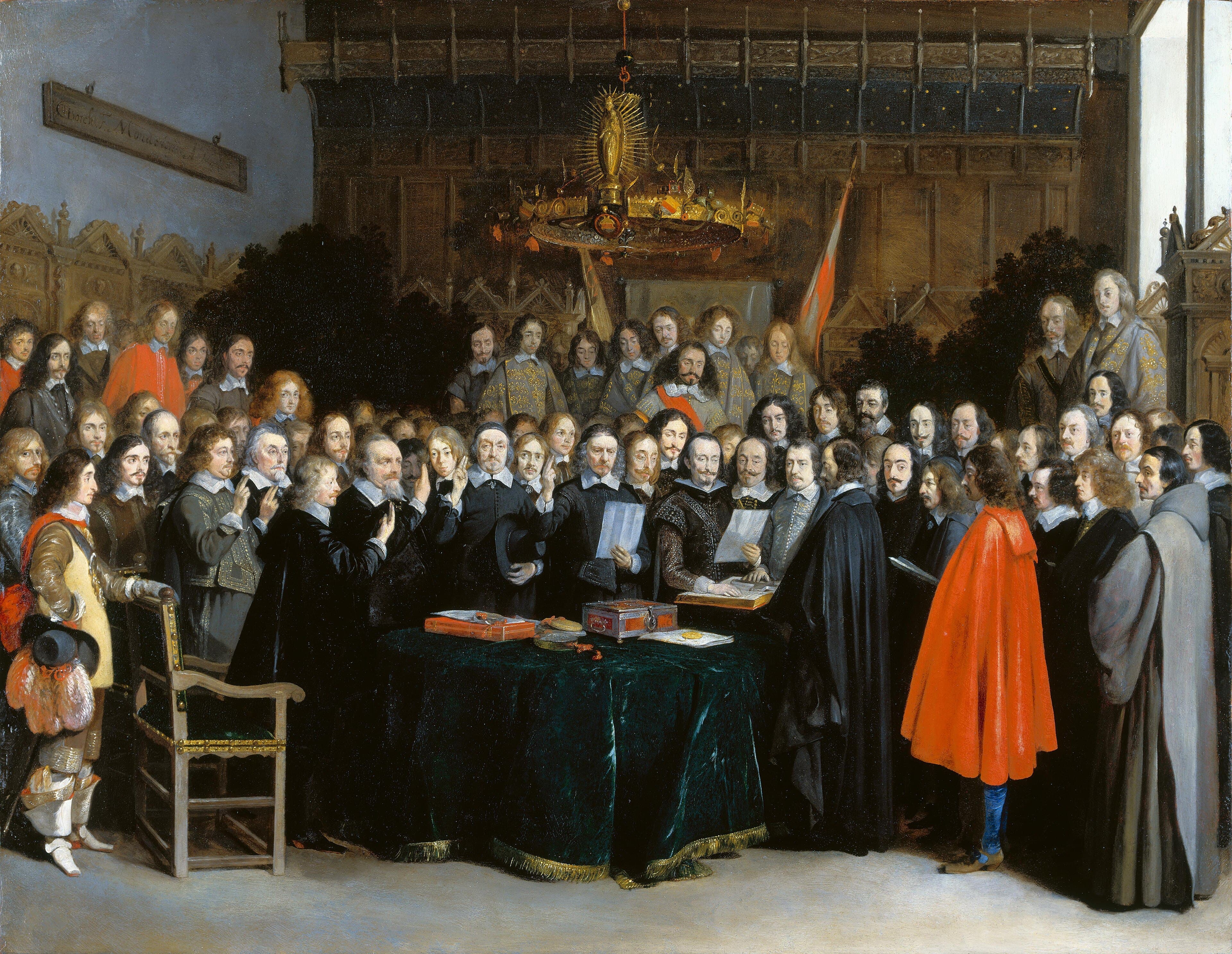
The Thirty Years' War had killed a substantial fraction of the population of central Europe. Everyone wanted it over. Nobody would concede the procedural questions — precedence, titles, who entered a room first — that would have let them all sit down together.
Two cities, because one was impossible
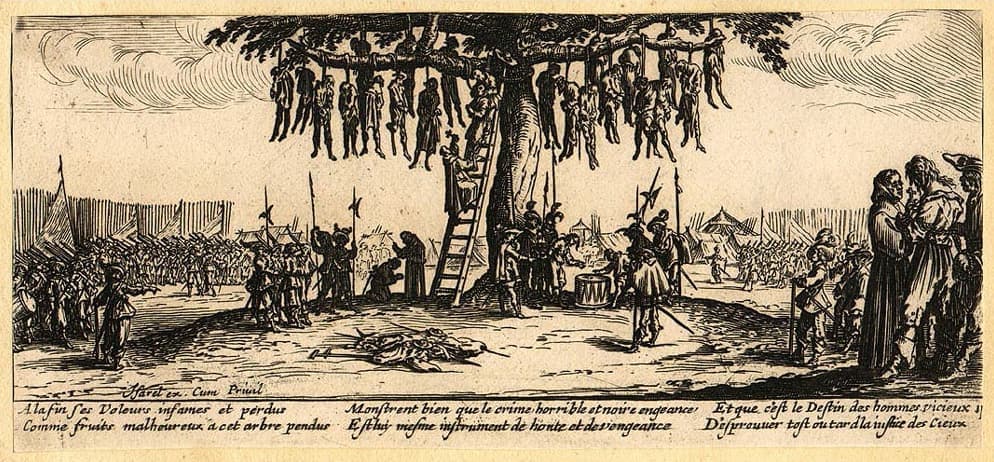
The solution was to hold the congress in two places simultaneously. Catholic powers negotiated with the Emperor at Münster; Protestant powers and Sweden at Osnabrück. Mediators and couriers moved between them constantly for five years.
This sounds like an absurdity and was in fact the enabling condition. The disputes over protocol were not trivial vanity — precedence encoded claims about sovereignty and status that the war was partly about. Splitting the venue removed the question from the table entirely and let the substance be discussed.
The congress also had to invent a great deal of machinery as it went: standing delegations, written credentials, the practice of negotiating from circulated draft texts. Most of what a modern multilateral negotiation looks like was worked out here because nothing else existed.
What was settled
Territorially: adjustments across the Empire, Swiss and Dutch independence recognised, France and Sweden compensated. Religiously: an extension of the earlier principle that a ruler determined the confession of his territory, with protections for existing minorities and a fixed reference year to stop the argument being reopened.
The most durable outcome was less a clause than a habit. The settlement treated the several hundred entities of the Empire as parties with standing to make treaties, and it settled a European war by conference rather than by the exhaustion of one side.
The long shadow
Political scientists talk about "Westphalian sovereignty" — the idea that states are territorially bounded, legally equal and not subject to outside interference in their internal affairs. That is a real thing, and Westphalia is a reasonable milestone for it, but the treaties themselves do not announce any such doctrine. The concept was assembled by later writers looking back.
What the congress unambiguously did establish was the format: a long, formal, multi-party negotiation with mediators and written texts, held at a neutral venue, that ends a war nobody can win.
What people get wrong
The treaties do not create the sovereign nation-state, and they say nothing like it. The Holy Roman Empire continued for another century and a half, and the settlement's constituent parts were mostly not nation-states in any modern sense. "Westphalian sovereignty" is a nineteenth- and twentieth-century framing applied retrospectively — useful shorthand, poor history.
They could not agree on who should enter the room first. So they used two rooms, thirty miles apart, for five years.