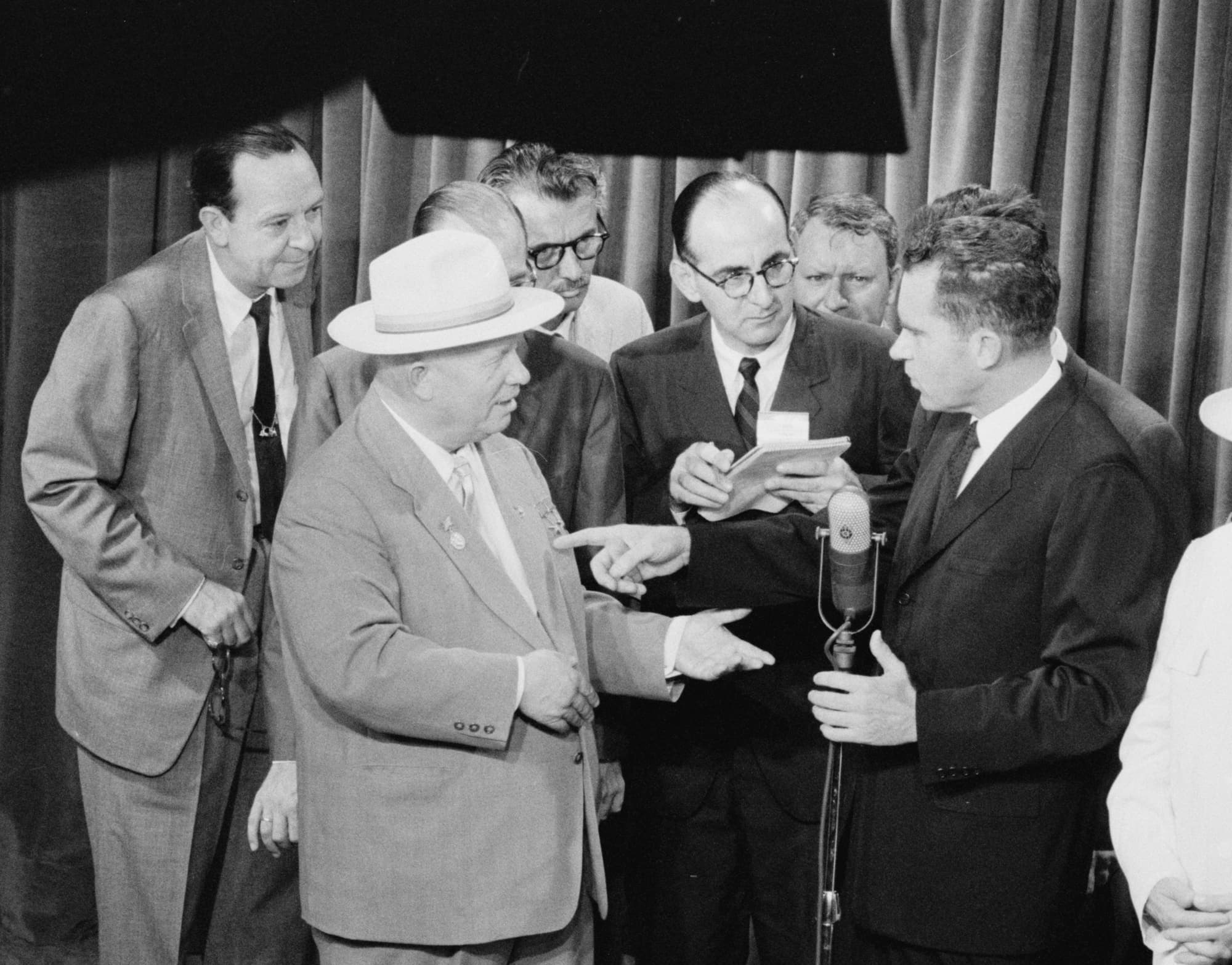
A cultural exchange agreement had put a Soviet exhibition in New York and an American one in Moscow. Vice President Nixon was there to open it. Khrushchev came to look round, and the tour turned into an argument that ran through several pavilions and peaked in the kitchen of a model house.
Everyone knew the cameras were on
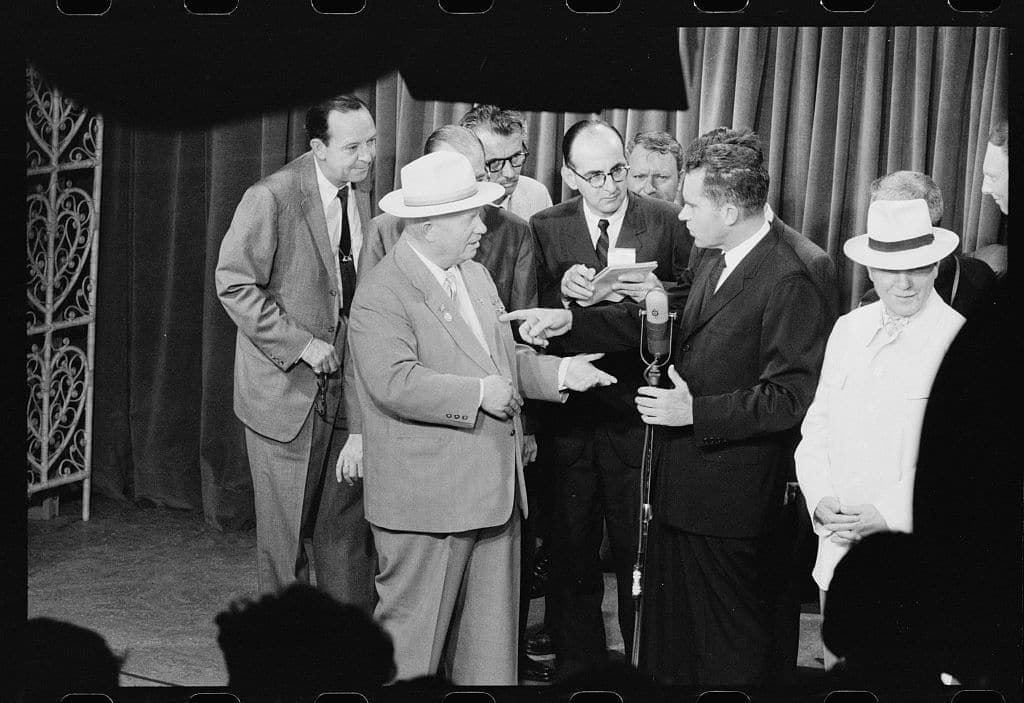
The exchange happened in front of an Ampex colour videotape rig — technology so new that the demonstration of it was part of the exhibit. Both men knew they were being recorded, and both played to it.
Nixon argued that the point of American production was choice: many kinds of washing machine, many kinds of house. Khrushchev's line was that Soviet housing came with the appliances included and did not require a mortgage, and that gadgets were not the measure of a society.
They also, in the middle of a conversation about dishwashers, threatened each other about missiles. The transcript swings between the two registers without a gear change.
The fight about broadcasting it
Having had the argument, they then argued about the tape. Nixon wanted it shown in the Soviet Union; Khrushchev wanted it shown in the United States, and doubted it would be. Both agreed on the spot that each would be broadcast in the other's country, in translation.
It largely happened. American networks ran it on 25 July. Soviet television showed it late at night a few days later, which is a form of agreement.
What it did for the participants
Nixon came home with a reputation for standing up to Khrushchev and used it in the 1960 presidential campaign, which he then lost by about a tenth of a percentage point.
The substance of the debate — whether a society should be judged by its consumer goods — turned out to be a question the Cold War eventually answered, though not in 1959 and not because of anything said in that kitchen.
What people get wrong
It was not a debate in any organised sense — nothing was scheduled, there was no moderator and no topic, and the exchange wandered through an exhibition hall before reaching the kitchen. The most reproduced photograph, with Nixon's finger in Khrushchev's chest, is from a different moment in the same visit, at the television studio, not the kitchen. And it was not one conversation but several across the day, stitched together in the retelling.
Having finished the argument, they argued about whether the other country would be allowed to watch it.