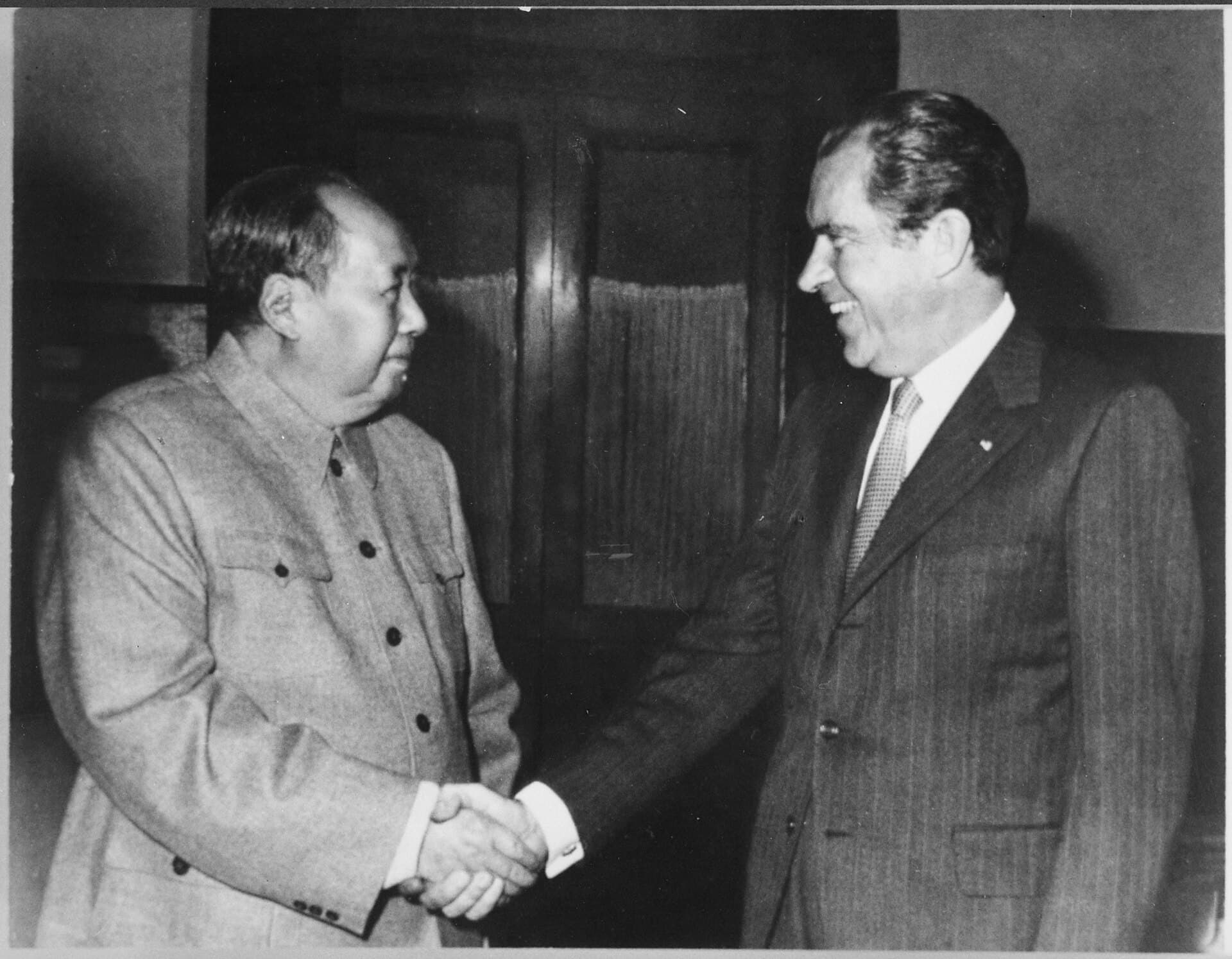
The United States and the People's Republic of China had not spoken properly since 1949. There was no embassy in either capital, no direct telephone line and no diplomatic channel. Arranging a meeting between their leaders was, before anything else, a problem of how to get a message to someone.
Passing notes through other countries
The opening was made through intermediaries. Pakistan carried the crucial traffic — President Yahya Khan had good relations with both Washington and Beijing — with Romania used as a parallel channel. Messages moved by hand, in confidence, with weeks between exchanges.
In July 1971 Henry Kissinger flew to Pakistan on an announced tour, developed a diplomatic stomach complaint, and withdrew to a hill station to recover. He was in fact on a plane to Beijing, where he spent two days with Zhou Enlai arranging a presidential visit. The illness was the cover story, and it held.
It is worth sitting with what that means. The most consequential diplomatic meeting of the decade was arranged with a latency of weeks per message, through a third country, using a fake medical excuse to hide a two-day absence.
Nobody knew if Mao would appear
Nixon landed in Beijing on the morning of 21 February 1972. The itinerary agreed in advance included banquets, talks with Zhou Enlai and a schedule of visits. It did not include a meeting with Mao Zedong, because the Chinese would not commit to one.
Within hours of the landing the Americans were told that the Chairman would see the President now. There was no notice, no preparation time and no agreed agenda. Nixon and Kissinger went; the Secretary of State was not included, which caused its own difficulties later.
Mao was seriously ill — he had been close to death only weeks earlier and was being managed by his doctors throughout. The meeting ran about an hour.
The meeting where nothing was negotiated
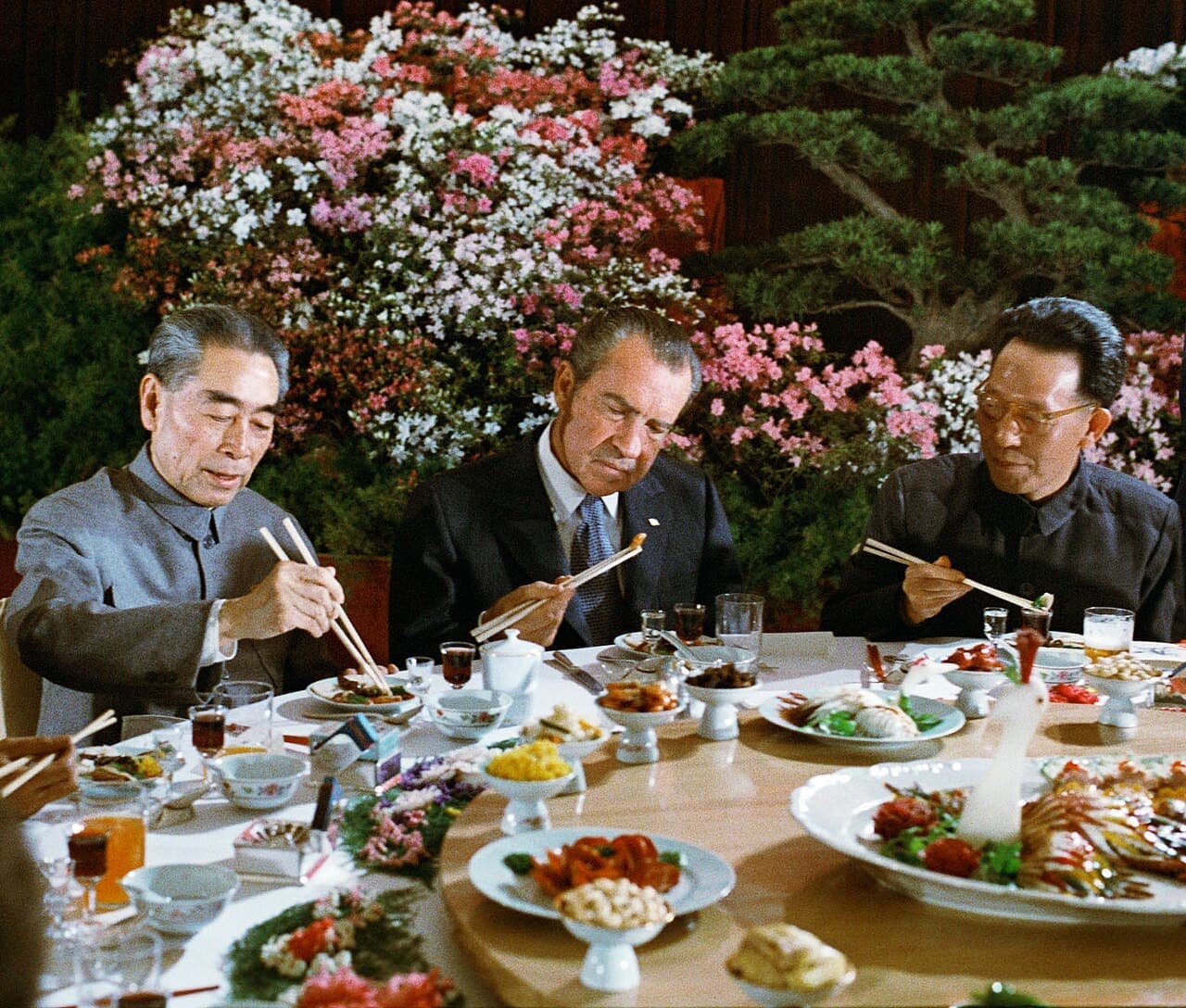
Mao declined to discuss specifics. He kept the conversation philosophical and often joking, waved away Taiwan as a question for later, and told Nixon that the difficult subjects should go to the premier. The substantive negotiating was done with Zhou Enlai across the rest of the week.
That was the design, not a failure. The Mao meeting existed to make the visit legitimate — a photograph of the two men shaking hands did work that no communiqué could. Once it had happened, everything else in the week was an implementation detail.
The Shanghai Communiqué came a week later, on 28 February. Its achievement was finding language on Taiwan that both governments could publish without either conceding: the United States acknowledged that Chinese on both sides of the strait maintained there is one China, and did not challenge that position. Full diplomatic relations took another seven years.
The reason it had to be him
Nixon's record as an anti-communist was the asset. A president with a softer reputation attempting the same opening would have been destroyed at home for it; Nixon had spent twenty years establishing that he could not plausibly be accused of sympathy. The phrase “only Nixon could go to China” has become a cliché about political cover, and in the original instance it was simply true.
The trip was staged for American television, timed so that the banquets fell in prime time on the eastern seaboard. Nixon called it the week that changed the world, which was his own line about his own trip, and has been repeated since as though it were a verdict rather than a slogan.
What people get wrong
The handshake with Mao was not where the work happened. It was short, largely unscheduled, deliberately unspecific, and the Chairman explicitly deferred the substance to Zhou Enlai. The negotiation that produced the Shanghai Communiqué ran over the following days between officials, most of it over the wording of a single paragraph about Taiwan. The famous meeting was the ceremony that made the rest of it sayable in public.
Messages took weeks and went through Pakistan. Then the meeting itself was sprung with a few hours' notice.