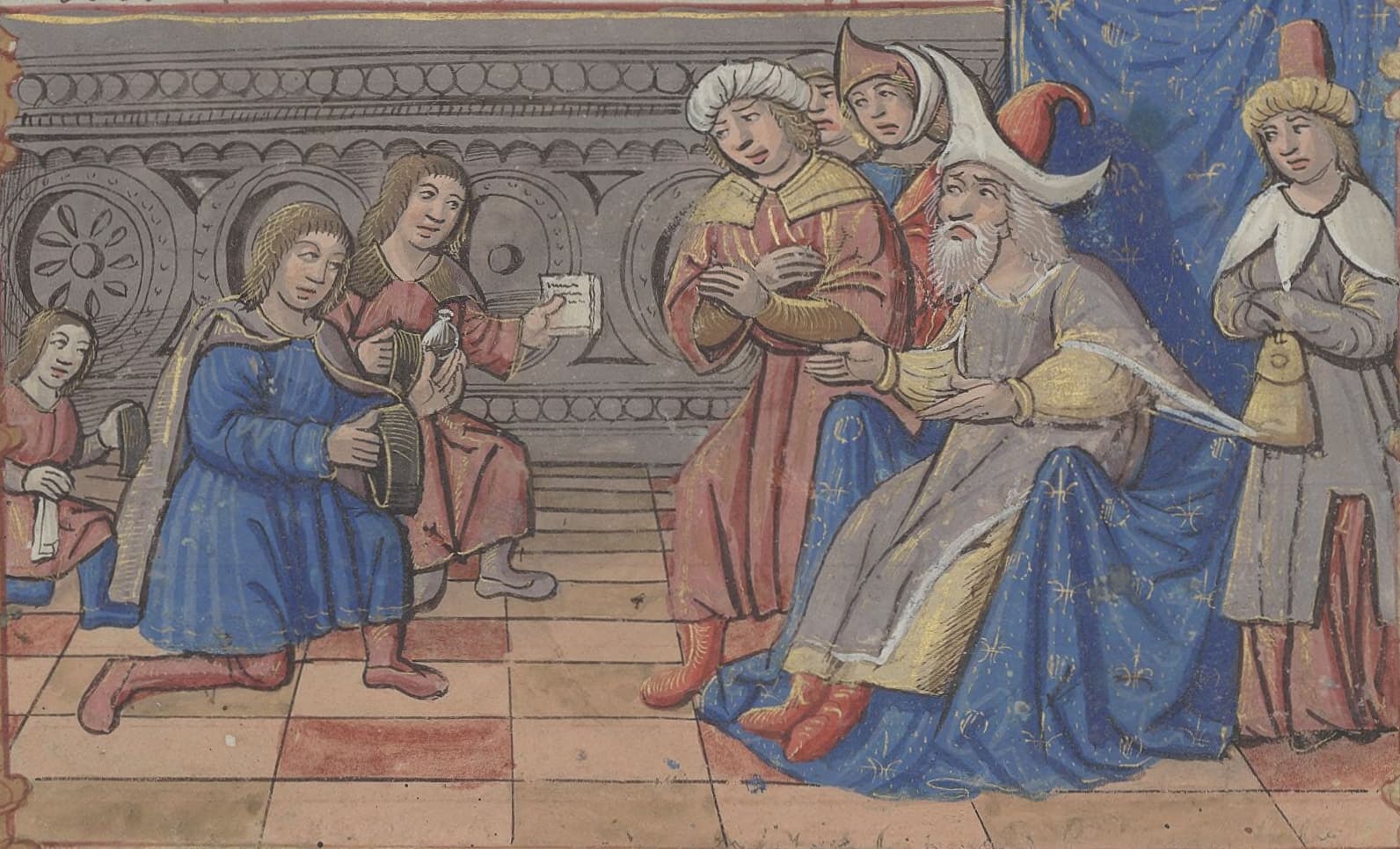
Niccolò and Maffeo Polo had already been to the Mongol court once and had come back with a request from Kublai Khan for a hundred learned men and oil from the lamp at the Holy Sepulchre. On the return trip they brought two friars, who turned back early, some oil, and Niccolò's teenage son.
The travel was the hard part
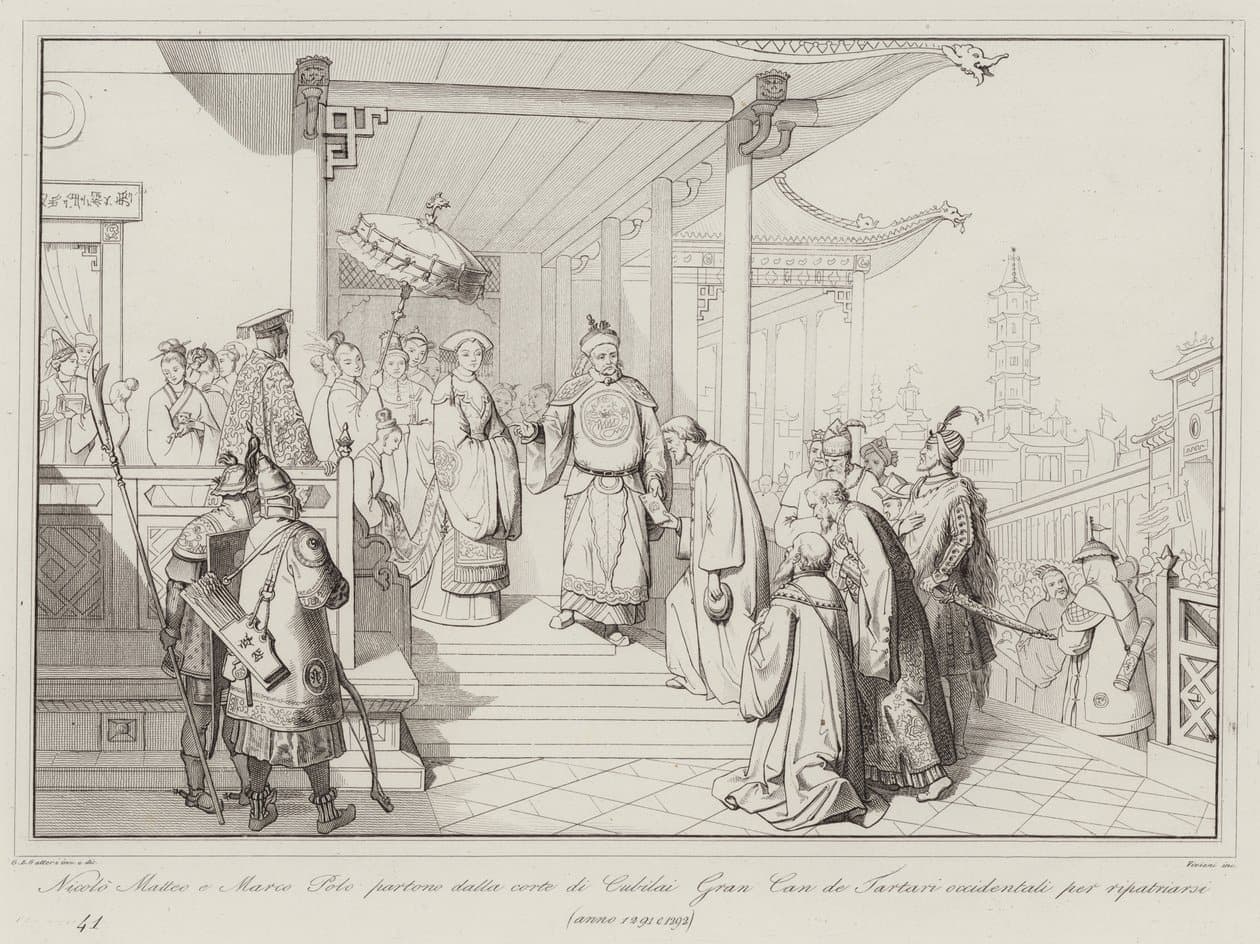
The route ran from Acre through Persia, across the Pamirs and the Taklamakan desert, and into China — roughly three and a half years, with long stops for illness and for weather. There was no way to send word ahead and no way to know whether the man they were travelling to meet was still alive when they arrived.
This is the part modern readers skip and shouldn't. Every meeting in this archive before the telegraph carries the same risk: you commit a year or more to a journey on the assumption that the situation at the other end will still be the situation you left for.
What the meeting produced
By Marco's account Kublai took to him, employed him on missions around the empire, and kept the family at court for something like seventeen years. They eventually got permission to leave by attaching themselves to a wedding party escorting a Mongol princess to Persia by sea.
The lasting product was not diplomatic. It was a description of a functioning, wealthy, administratively sophisticated empire, delivered to a Europe that had no idea of the scale of what was out there — paper money, a postal relay system, coal, cities larger than anything in the West.
Written in a cell
Marco returned to Venice in 1295, was captured in a war with Genoa a few years later, and shared a prison cell with Rustichello of Pisa, a writer of Arthurian romances. Rustichello wrote the account down.
That is the entire provenance of what we know: one man's recollection of events up to twenty-five years old, shaped by a co-author whose day job was making stories entertaining, surviving in manuscripts that copyists then edited freely. The book was known in its own time as Il Milione, which may be a family nickname and may be a comment on how many of the numbers in it people believed.
What people get wrong
Polo did not bring pasta or ice cream back from China; both stories are twentieth-century inventions, the pasta one traceable to an American trade magazine in the 1920s. Historians also argue seriously about how much he saw himself — he never mentions the Great Wall, tea, chopsticks or foot-binding, and no Chinese source records him. The likeliest reading is that he went, and that the book mixes what he saw with what he was told and what Rustichello improved.
Everything we know about the meeting comes from one participant, twenty-five years later, dictated to a man who wrote romances for a living.