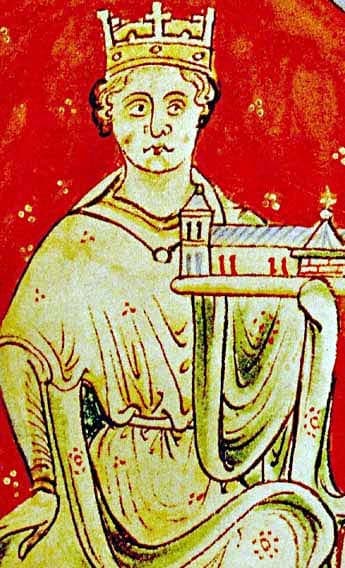
By the summer of 1215 King John had lost Normandy, taxed England to pay for trying to get it back, quarrelled with the Pope, and lost the confidence of the men he depended on. The barons had taken London. Neither side could finish the other, so they arranged to talk.
Choosing ground nobody owned
Runnymede is a flat water-meadow on the south bank of the Thames, roughly between Windsor Castle, which was John's, and Staines, which the barons controlled. It had no walls, no gates and no owner in the relevant sense.
That was precisely the qualification. For John to negotiate inside a baronial stronghold was to put himself in their hands; for the barons to enter Windsor was to do the same in reverse. An open field where both parties could arrive with their own men, see each other coming, and leave in either direction was the only kind of place the meeting could happen.
It is the oldest problem in convening anything difficult, and the answer has not changed much. Reykjavík and Singapore were chosen on the same logic eight hundred years later.
What was agreed
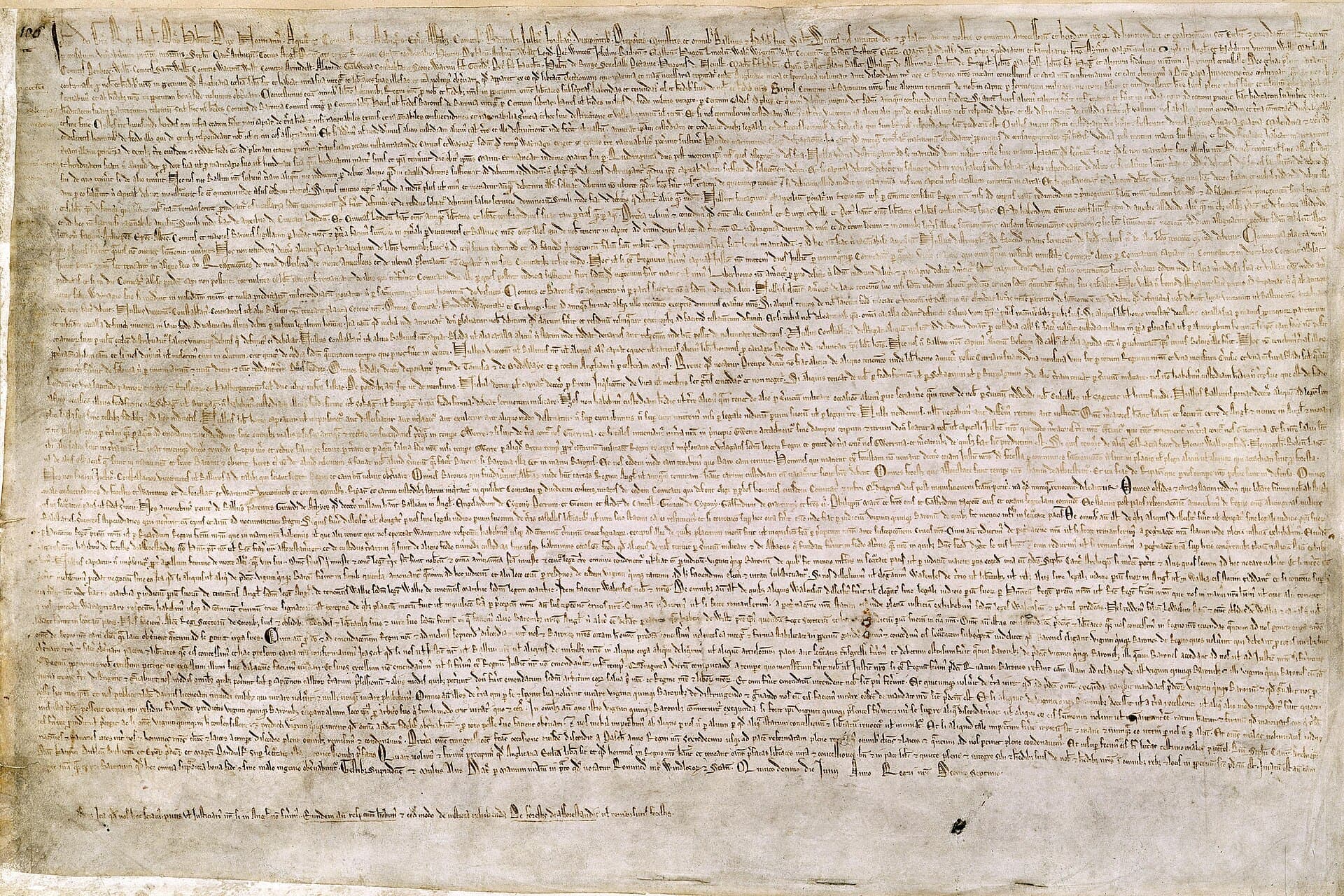
The document that came out of it is mostly a list of specific, immediate grievances: the size of feudal payments, the treatment of widows, the behaviour of royal officials, the removal of fish weirs from the Thames. It reads like what it was — a peace treaty between a king and his creditors.
A few clauses turned out to matter far beyond their moment, particularly the promise that no free man would be imprisoned or dispossessed except by lawful judgment of his peers or by the law of the land. That principle is the reason anyone remembers the rest.
Clause 61 was the one that killed it: a committee of twenty-five barons empowered to seize the king's castles and lands if he broke the terms. No monarch was going to live with that.
It failed immediately
John sealed it on 15 June and began working to have it overturned almost at once. In August, Pope Innocent III annulled it — describing it as shameful and extorted by force — and released John from any obligation to observe it. England was at civil war by autumn.
John died the following year. His supporters, needing to hold the throne for a nine-year-old boy, reissued the charter as a statement of good intentions, and did so again in 1216, 1217 and 1225. It is the 1225 version, not the one sealed at Runnymede, that entered English law and remains partly on the statute book.
The meeting achieved nothing it set out to achieve. What it produced was a text that people kept reissuing because it was useful, until it had been reissued so often that it became foundational.
What people get wrong
John did not sign Magna Carta. It was authenticated with the great seal, which is how royal documents were validated; the picture of a king with a quill is a later invention. There is no single original either — several exemplars were written out and distributed, four of which survive. And it was not a charter of liberties for the English people in any sense its authors would have recognised: it was a settlement between a king and the aristocracy who funded him, and most of the population it did not concern at all.
A meadow with no walls, halfway between his castle and their town. That was the entire reason it could happen.