The official Israeli–Palestinian negotiations, launched at Madrid in 1991, had been grinding on in Washington for two years without result. In parallel, a Norwegian researcher and his wife, a foreign ministry official, quietly assembled a channel that officially did not exist.
Deniable by design
The first meetings were held in a country house outside Oslo between two Israeli academics — with no official standing, which was the point — and PLO officials, whom it was then a criminal offence for Israelis to meet.
Because nobody present was authorised, nothing said could bind anyone, and both sides could walk away denying it had happened. That is precisely what let people say things they could not have said in Washington. As it progressed, the participants were quietly upgraded until actual officials were in the room.
The Norwegians provided the houses, the meals and the discretion, and largely stayed out of the substance. Fourteen rounds ran over eight months without a leak.
The handshake was staged
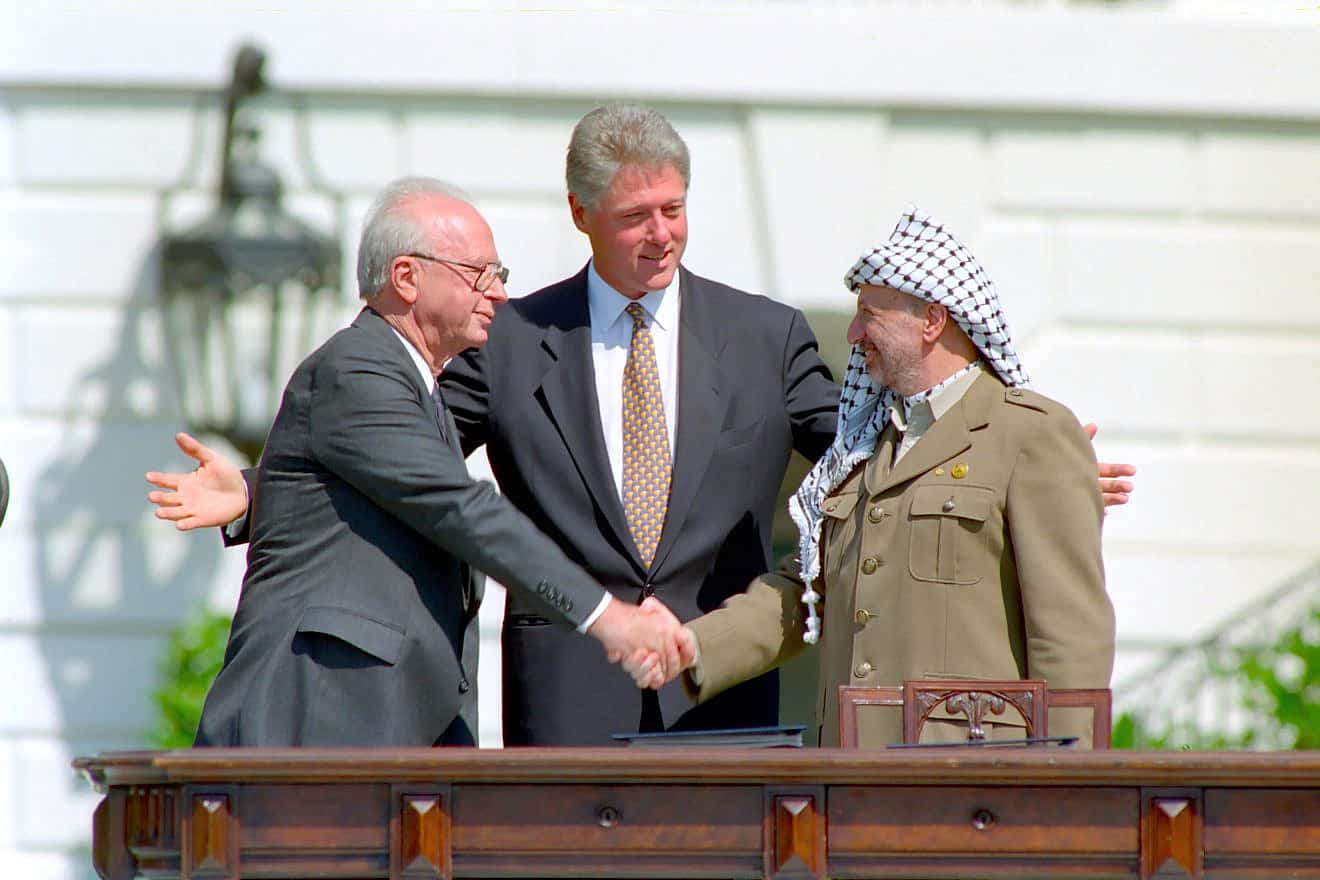
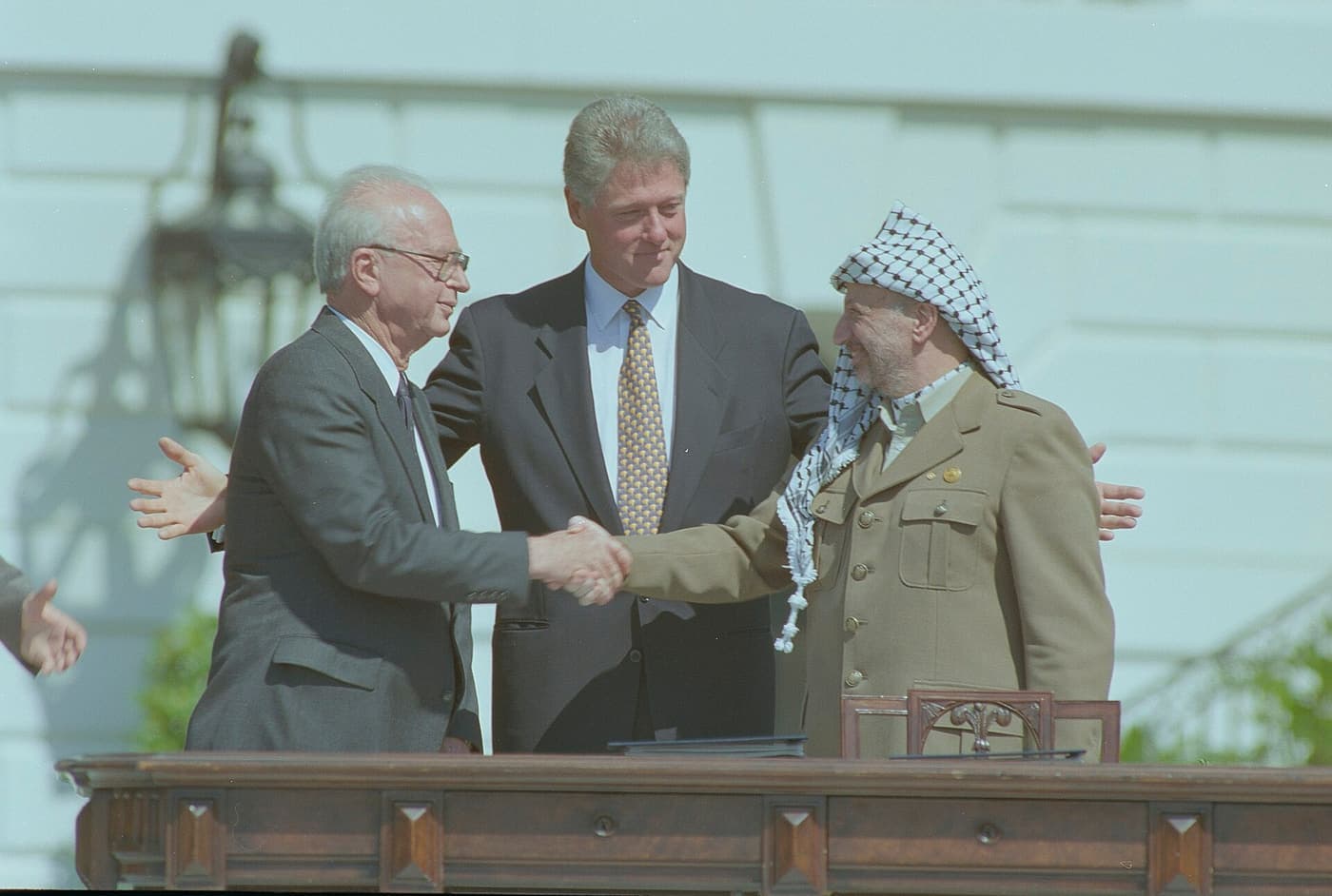
Rabin did not want to shake Arafat's hand and said so repeatedly. Clinton's staff rehearsed the ceremony the night before in the Map Room, with an aide standing in for Arafat, working out the sequence — Clinton would open his arms, turn to Rabin, and leave him nowhere to go.
They also agreed a specific concern of Rabin's: that Arafat would try to embrace him. Clinton practised a two-handed gesture designed to block it. On the day it worked exactly as rehearsed.
It is the most reproduced image in the history of the conflict, and it was choreographed the previous evening by people worried about exactly which body part would touch which.
What it was and was not
The Declaration of Principles was not a peace treaty. It was mutual recognition plus an agreement on a five-year interim period of Palestinian self-government, with the hardest questions — Jerusalem, refugees, borders, settlements — explicitly deferred to later negotiations that were meant to conclude by 1999.
Rabin, Peres and Arafat shared the Nobel Peace Prize in 1994. Rabin was assassinated by an Israeli opponent of the accords in November 1995. The permanent-status talks did not conclude.
What people get wrong
Oslo did not create a Palestinian state or settle anything permanent — it deliberately postponed every difficult question to a later stage that never arrived. It is also not an American achievement: the United States was largely unaware of the channel until it was almost complete, and the White House ceremony was the arrival of a deal already done. The venue was borrowed, and the credit followed the venue.
Nobody in the room was authorised to agree anything. That is exactly why they could talk.