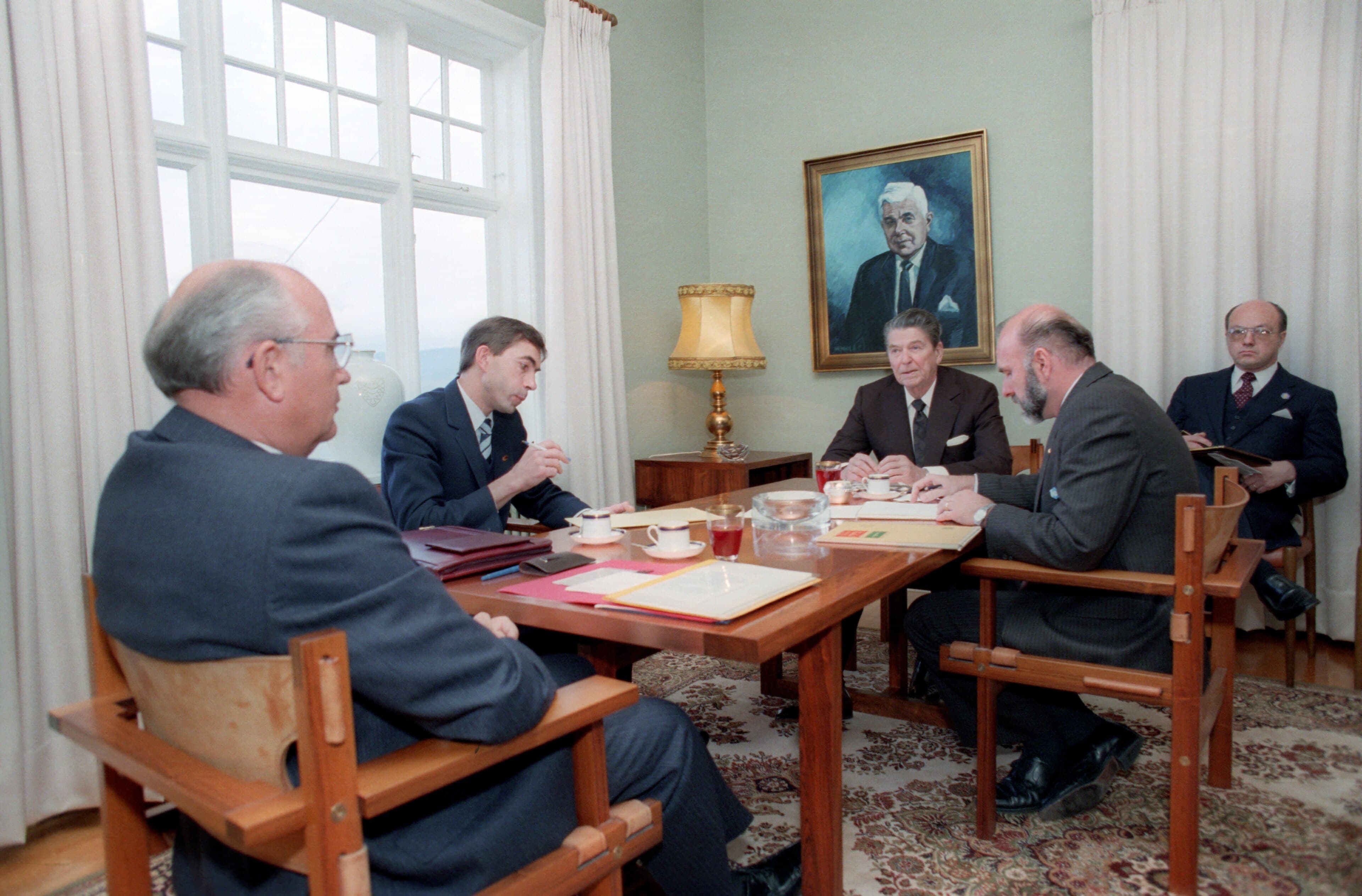
It was not supposed to be important. Gorbachev proposed it in a letter as a quick working meeting to unblock preparations for a proper summit later. Two days later the two men were discussing whether to abolish nuclear weapons entirely, and had talked themselves to the edge of agreeing.
Three weeks' notice
Superpower summits normally took a year to prepare. Positions were agreed in advance through officials, the communiqué was largely drafted before anyone arrived, and the leaders met to ratify work already done. The point of that machinery was to guarantee that nothing unexpected happened.
Gorbachev's letter proposed something different: a short, informal meeting, somewhere quiet, with minimal delegation and no agenda to speak of. Reykjavík was chosen partly for being roughly equidistant and largely for being unglamorous — the whole framing was that this was not a summit and would produce nothing to announce.
So it convened in about three weeks, with far less preparation than either bureaucracy would have wanted. That turns out to be the whole story.
It ran away with them
With no pre-agreed script, the two leaders started proposing things directly to each other. Over two days the offers escalated in a way that alarmed the officials in both delegations: deep cuts in strategic forces, then the elimination of all ballistic missiles, then — at the furthest point — the idea of removing nuclear weapons altogether within a decade.
Whether they were ever genuinely close is still argued about. The proposals were sketched verbally, without the definitions, verification arrangements or timetables that any real treaty needs, and both men were exceeding what their own establishments had authorised. But the transcripts show two heads of state talking about abolition as a practical matter and getting a considerable distance into the detail.
Where it broke
It came apart over the Strategic Defense Initiative — Reagan's proposed missile defence system, universally known as Star Wars. Gorbachev's condition was that research be confined to the laboratory for ten years. Reagan would not accept a restriction on testing and deployment, and the meeting ended without agreement.
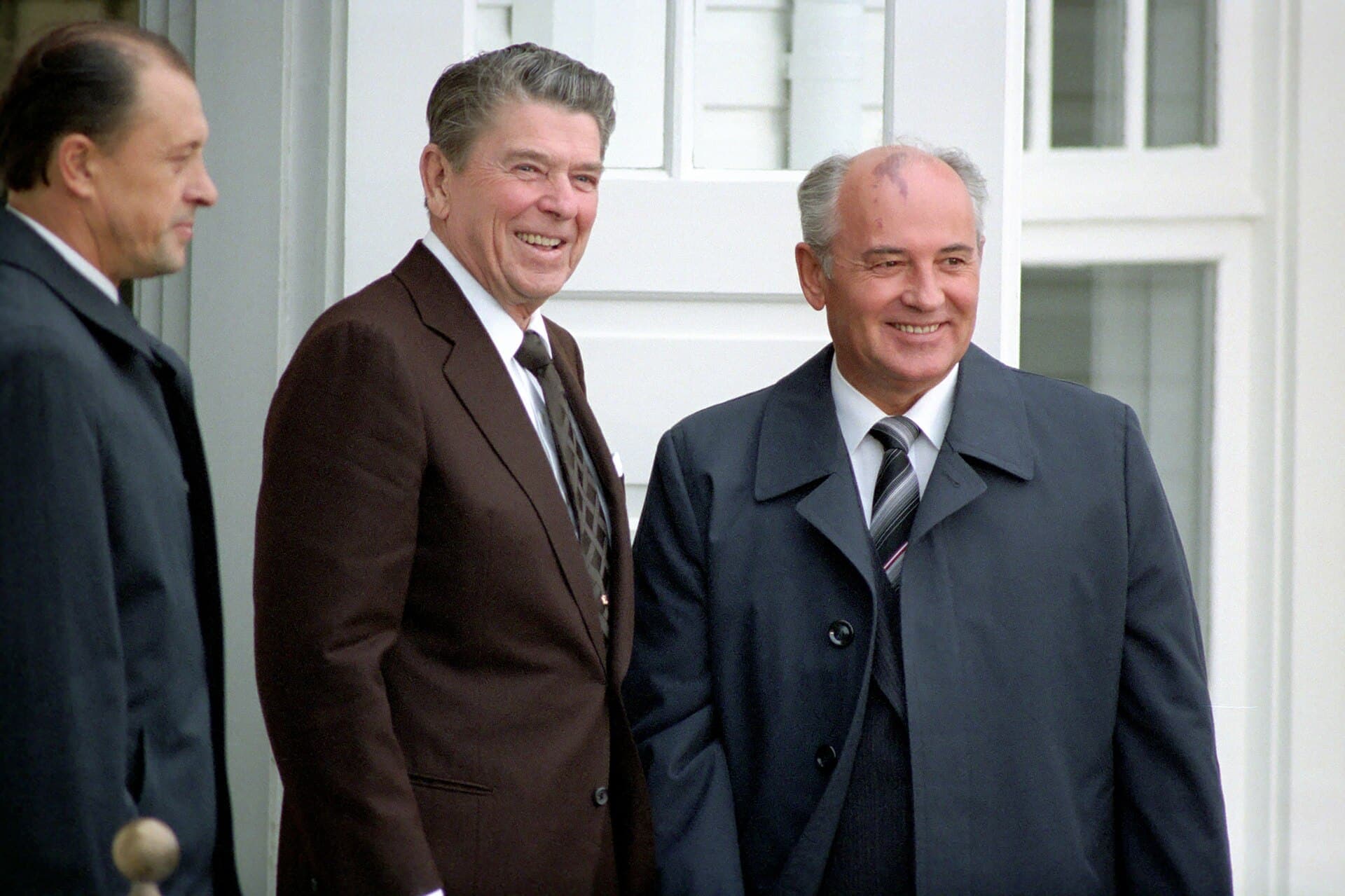
The photographs from the end of it are unusually candid for a diplomatic occasion: two visibly angry men on the steps of a small white house, not managing to conceal it.
The immediate press verdict was failure. Nothing had been signed, the two delegations had arrived expecting nothing and left with less, and the near-miss on abolition read at the time as evidence that the whole thing had been unserious.
Except it wasn't
Fourteen months later the two governments signed the Intermediate-Range Nuclear Forces Treaty, which eliminated an entire class of weapon and included the most intrusive verification regime ever agreed between them. The substance of it had been worked out at Reykjavík.
What the meeting produced was not an agreement but a discovery: each leader learned what the other would actually contemplate, which no amount of pre-negotiated communiqué could have told them. Both sides had put positions on the table that their own officials would never have cleared, and those positions did not go away afterwards.
The lesson is slightly uncomfortable for anyone who likes tidy meetings. Reykjavík went as far as it did because it was under-prepared, and the thing that made it look like a failure — nothing signed — was a consequence of the same informality that made the progress possible.
What people get wrong
Reykjavík is filed as a failed summit, and on the day that was a reasonable description. But it was never convened as a summit at all — it was billed as a preparatory working meeting with no expected deliverable, so judging it by what it failed to sign applies a standard nobody had set for it. The INF Treaty of December 1987 is substantially the Reykjavík conversation, written down.
It went further than any arms talk before it because nobody had written the script in advance.